
Floors and skirtings: acrylic on top, not underneath
Under the skirting there is mop water, movement and, on PVC, plasticisers; on top there is paint. That is two different cartridges.
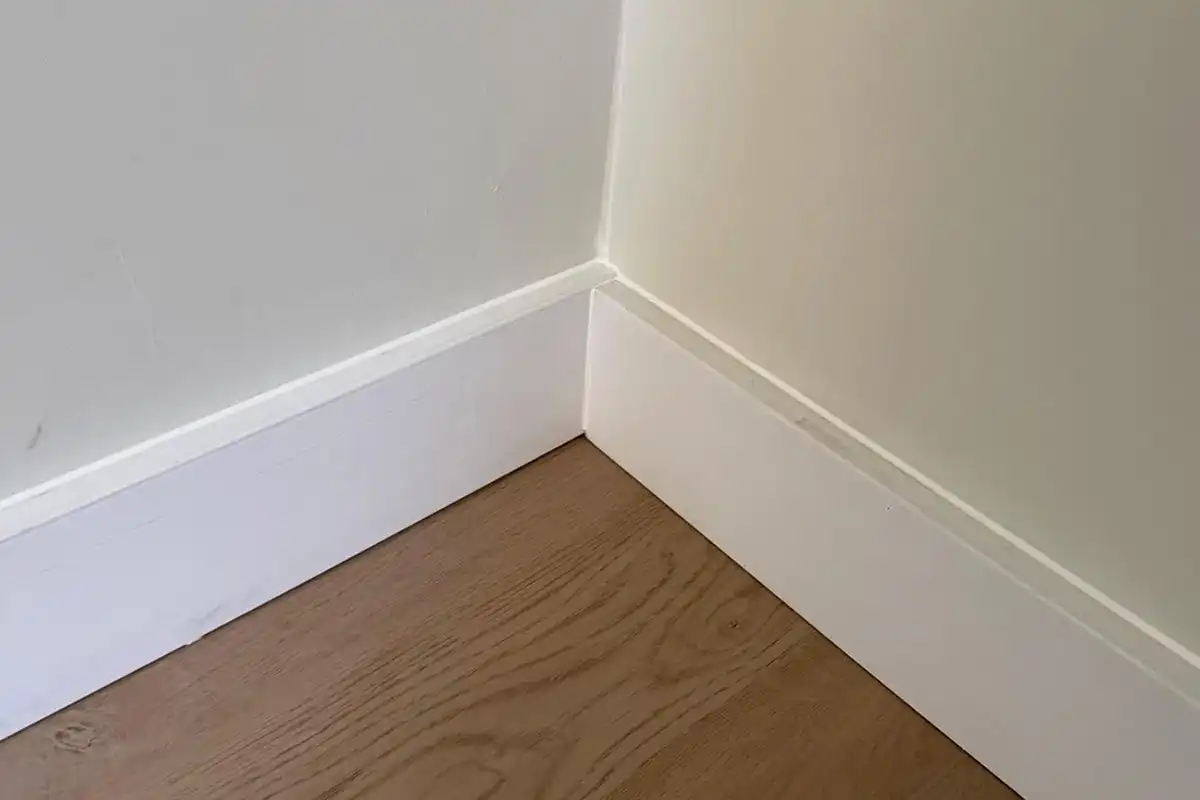
Under the skirting I use a neutral silicone or an elastic hybrid that takes mop water and PVC plasticisers. On top, a paintable acrylic sealant. Acrylic underneath goes soft and dirty.
Two joints, two products
A skirting on a PVC floor (or any floor you mop) does not want the same sealant top and bottom. Below there is rub, floor movement, often plasticisers from the PVC, and mop water. Above there is plaster or paint: you want a joint you can paint with the wall.
One cartridge for both lines is the usual mistake. Acrylic sealant underneath drinks water, goes soft, picks dirt and cracks. It also does not have the elasticity of a floor joint.
PVC carries plasticisers to stay flexible. Some silicones react: the bead stays tacky or discolours. Underneath I want a plasticiser-resistant neutral or an elastic hybrid. No aggressive acetic chemistry against PVC.
When to seal — and when not
Yes, below: neutral silicone or elastic hybrid that takes mopping.
Yes, above: paintable elastic acrylic, to finish with the wall.
No acrylic below. First mop, water in; black edges follow.
Do not lock a floating floor that is hard against the wall. Without an expansion gap the floor humps. That is not “fixed” with paste: free the perimeter first, then an elastic bead that does not block the float.
How I do it
- Degrease floor, skirting and wall. Factory PVC often has a film; without a clean, adhesion is weak.
- If the gap is deep, closed-cell PE backer rod. Without it, three-sided adhesion: floor, skirting and the wall or slab behind. The bead tears.
- Even bead below; tool with a suitable finisher and a spatula.
- Above, acrylic between skirting and wall. Tool it and let it cure before painting. Depending on temperature and humidity, from a few hours to a day; the product decides, not a universal clock.
Common mistakes
Acrylic on the floor edge. Skipping the degrease on PVC. Filling a wide slot without backer rod. A hybrid or silicone that is too stiff below: the floor still wants to move.
Exceptions
Solid timber skirting on a stone floor has different chemistry and movement; the principle (wet and elastic below, paintable above) usually still holds. A floor that already humps is a perimeter problem, not a cartridge colour.
What I use on this joint
-
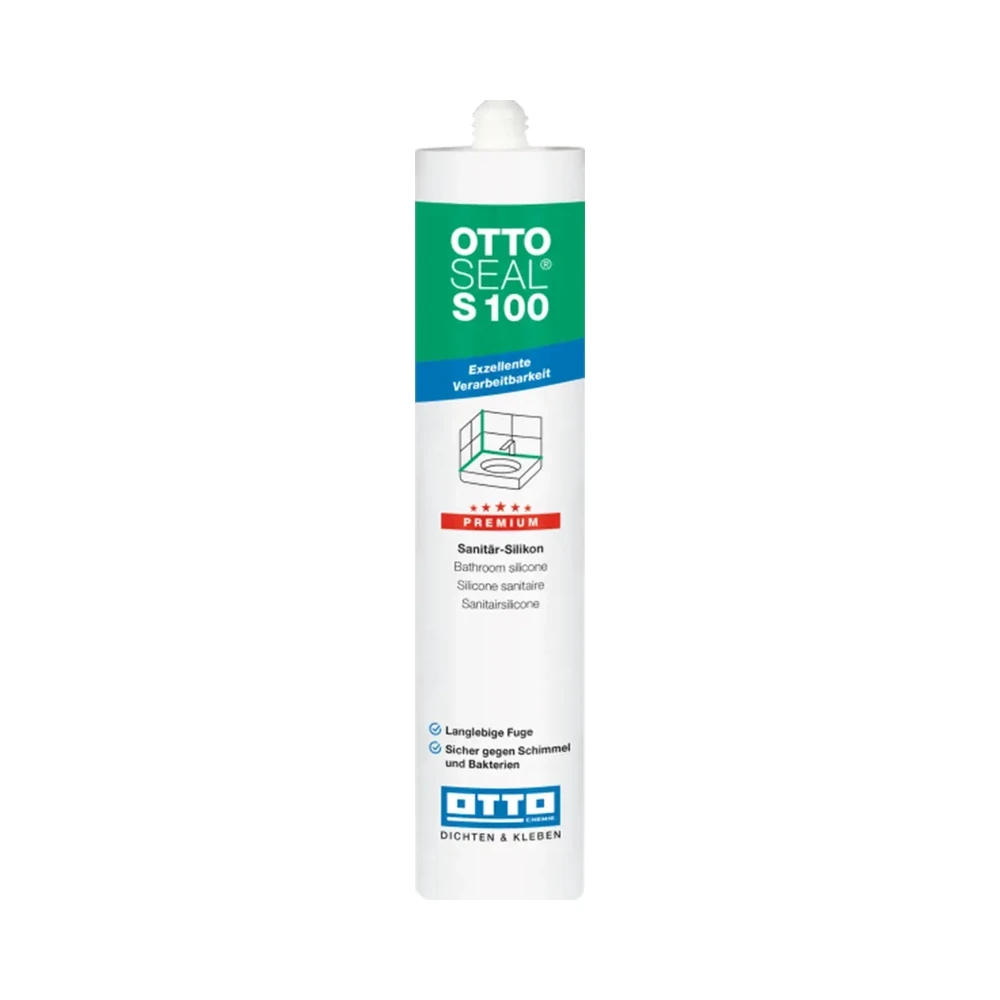
OTTOSEAL S100
The sanitary silicone I use on showers and baths. Elastic — not a staining-risk stone silicone.
OTTOSEAL S100 Purchase link not available
-
Paint cracking on the skirting: the acrylic underneath is still working
Craquelure along the joint is usually late shrink or acrylic that cannot take movement, not “bad paint”.
-
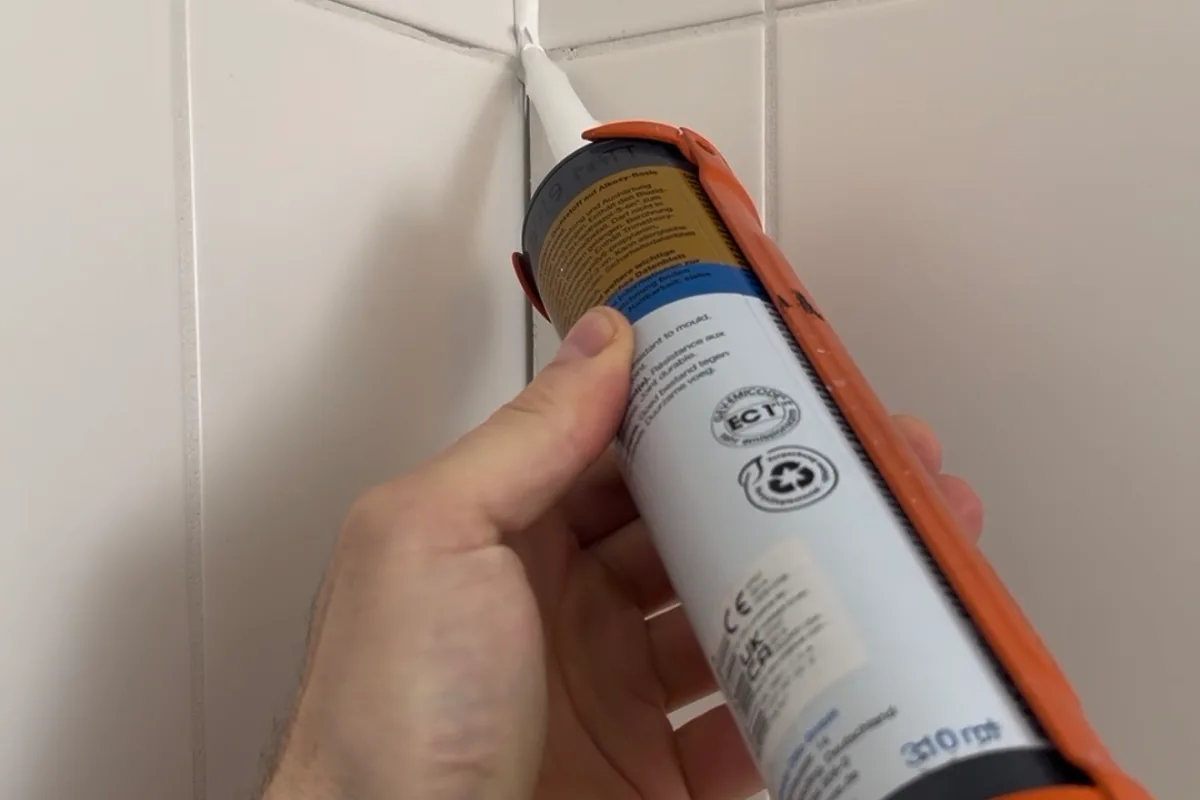
Can you paint the joint? Silicone no; acrylic yes
Paint pulls off silicone; in the shower you buy the cartridge colour, not a brush.
-
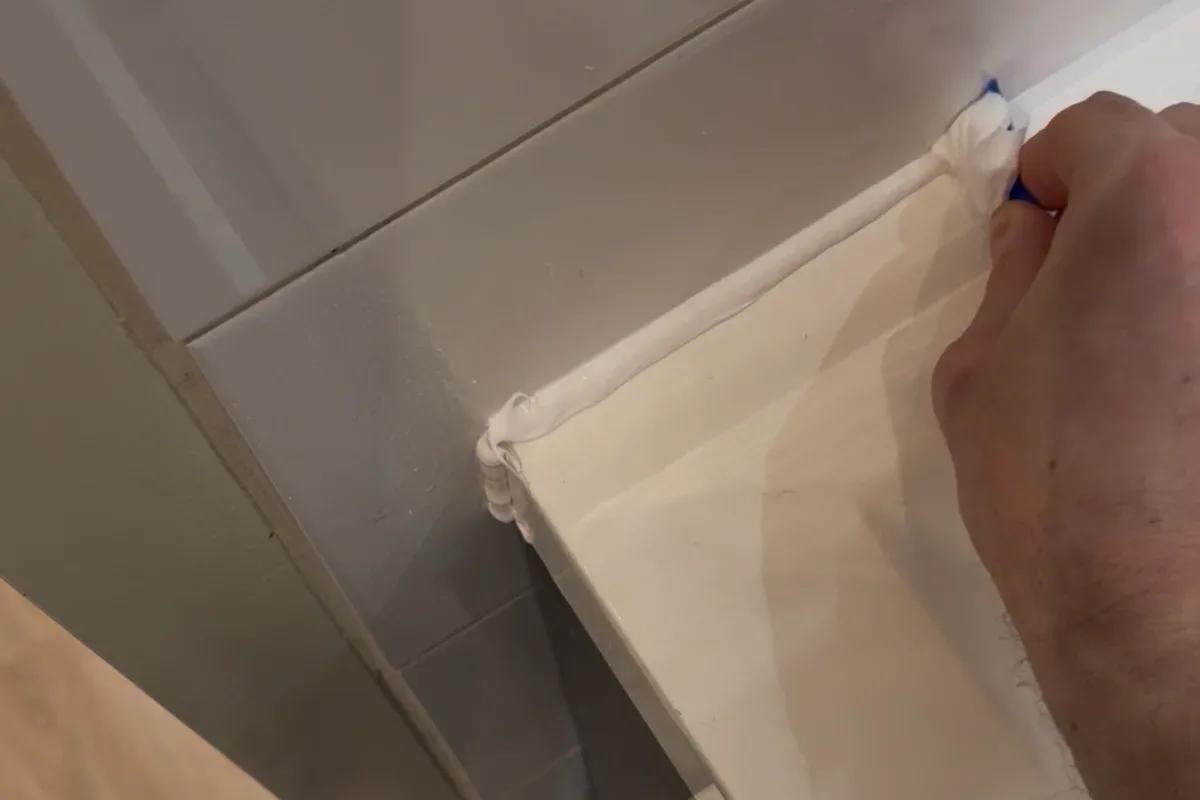
Movement joints: when silicone instead of grout
Corners, material changes, large fields and underfloor heating. Cement grout will not give.