
Paint cracking on the skirting: the acrylic underneath is still working
Craquelure along the joint is usually late shrink or acrylic that cannot take movement, not “bad paint”.
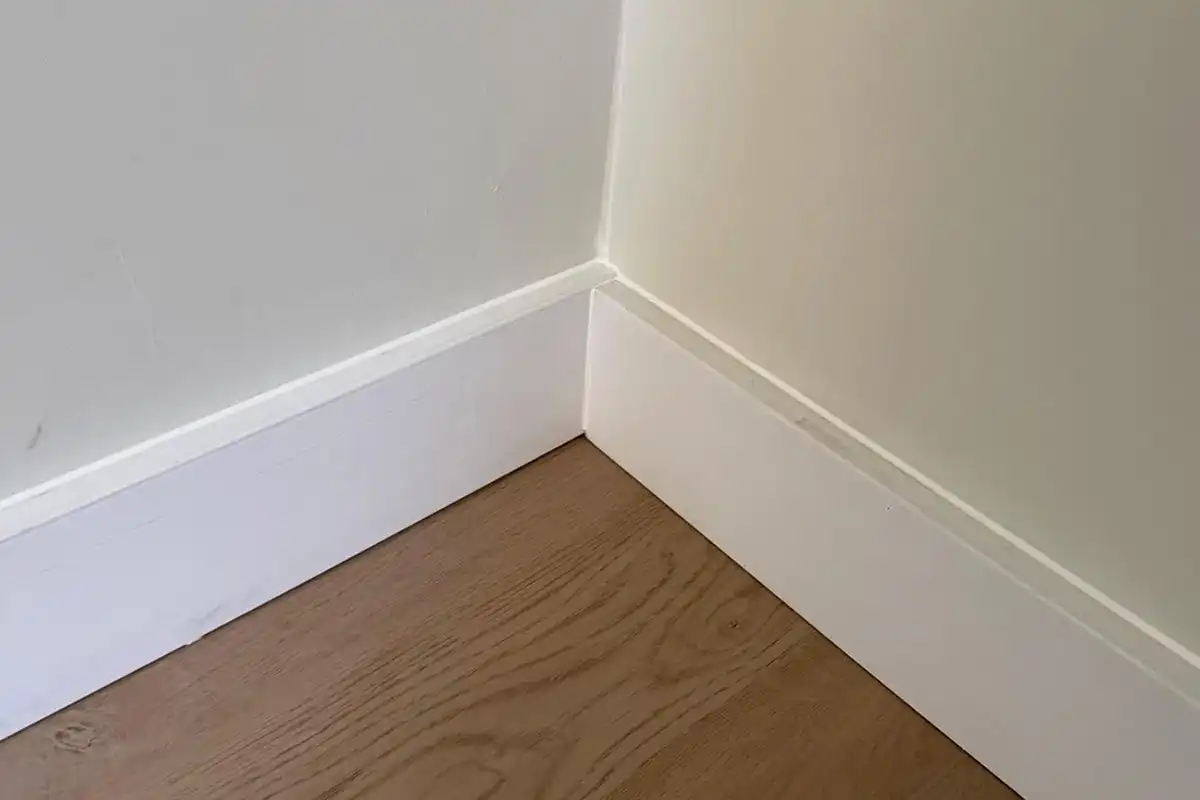
On a skirting you will paint, use a low-shrink acrylic sealant, wait until it has actually cured, then paint. Silicone does not belong here: paint will not wet the bead and pulls into fish-eyes.
Why the film splits
You paint the skirting, it looks tight, and three months later hairline cracks sit right on the joint. The craquelure is not born in the tin of enamel. It is born because the acrylic sealant underneath is still shrinking or still moving, and the paint is stiffer.
Cheap acrylic carries a lot of water. As it evaporates, the bead shrinks. If you have already locked that shrink under paint, it pulls the film apart. “Fast dry” is not always the answer either: those products are often less elastic, and at the first winter the timber moves and the joint still opens.
Here I use a low-shrink interior acrylic, something like OTTOSEAL A205, elastic enough for the skirting-to-wall meeting. It is not magic: if the board rocks when you walk, no chemistry will hold. Fix it first.
When acrylic, and when not
Yes acrylic: gaps to be painted at skirting, door linings, ceilings.
No silicone (not S100, not the bathroom tube) if you will paint over it. Paint pulls off.
Wait: at least 24 hours on a normal joint; in the cold or damp, 48 is more honest. Painting wet-on-wet seals the water in: the acrylic stays soft underneath and the paint wrinkles or splits when the bead finally tries to dry.
If the gap between board and wall is more than about 5–8 mm, do not pack it with a fat sausage. Pack first, then a thin bead.
How I do it
- Get dust and grease out between board and wall.
- Gun the acrylic in a continuous bead into the gap.
- Tool with a nearly dry spatula. A little water, never soapy water: soap later ruins the paint.
- Wait until it has actually cured.
- Finish with a decent enamel. A205 gets on with most common paint systems.
The first winter
Heating dries the timber. The board shrinks; the wall barely does. A stiff acrylic lets go of the plaster. That is not fixed with “another coat” over the crack.
The board-to-floor meeting: often left unsealed. If you want it closed, it is usually a silicone in the floor colour, not paintable acrylic, because the floor is not painted.
Exception
Sensible order: fit the skirting, seal with acrylic, wait, then the last coat on the board. If the board is loose, sort the mechanical fix before you argue about the cartridge.
-
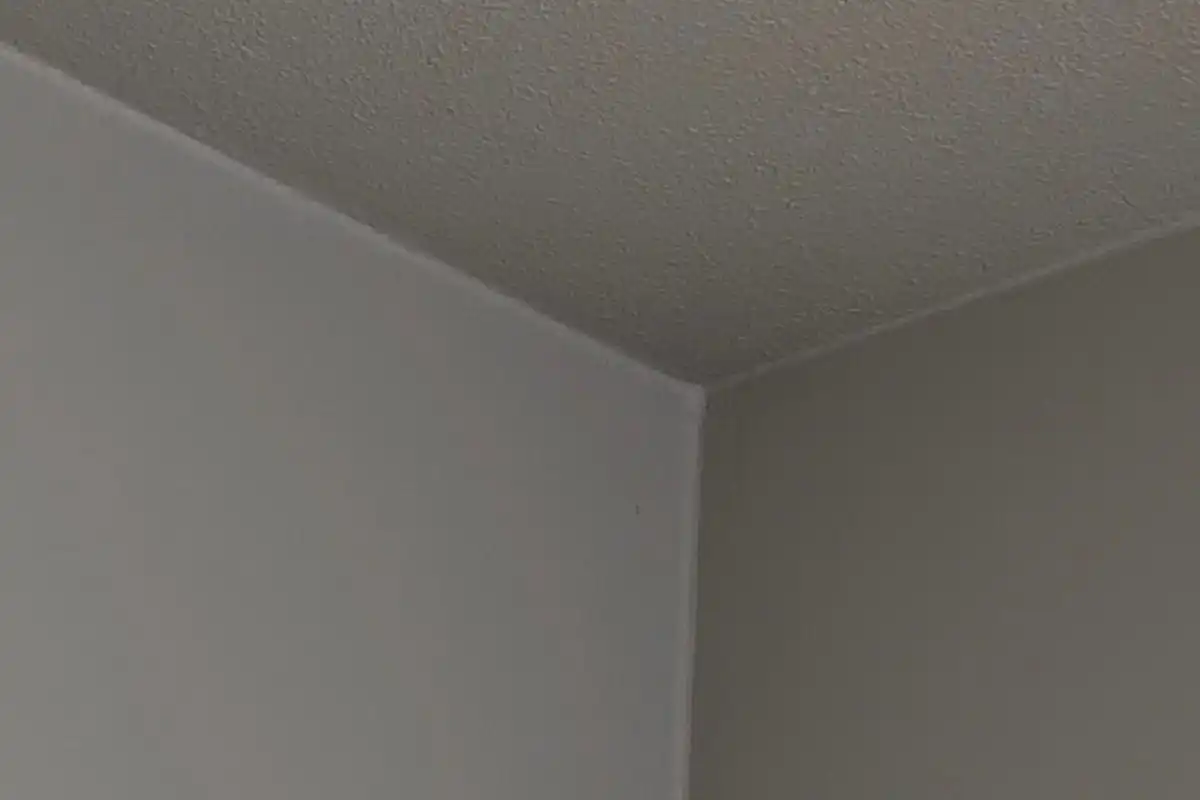
Paint cracking on the ceiling joint: it is not (only) the paint
Craquelure on the ceiling line usually means the acrylic is still shrinking after the paint film has gone hard — or the bead was tooled with soap.
-
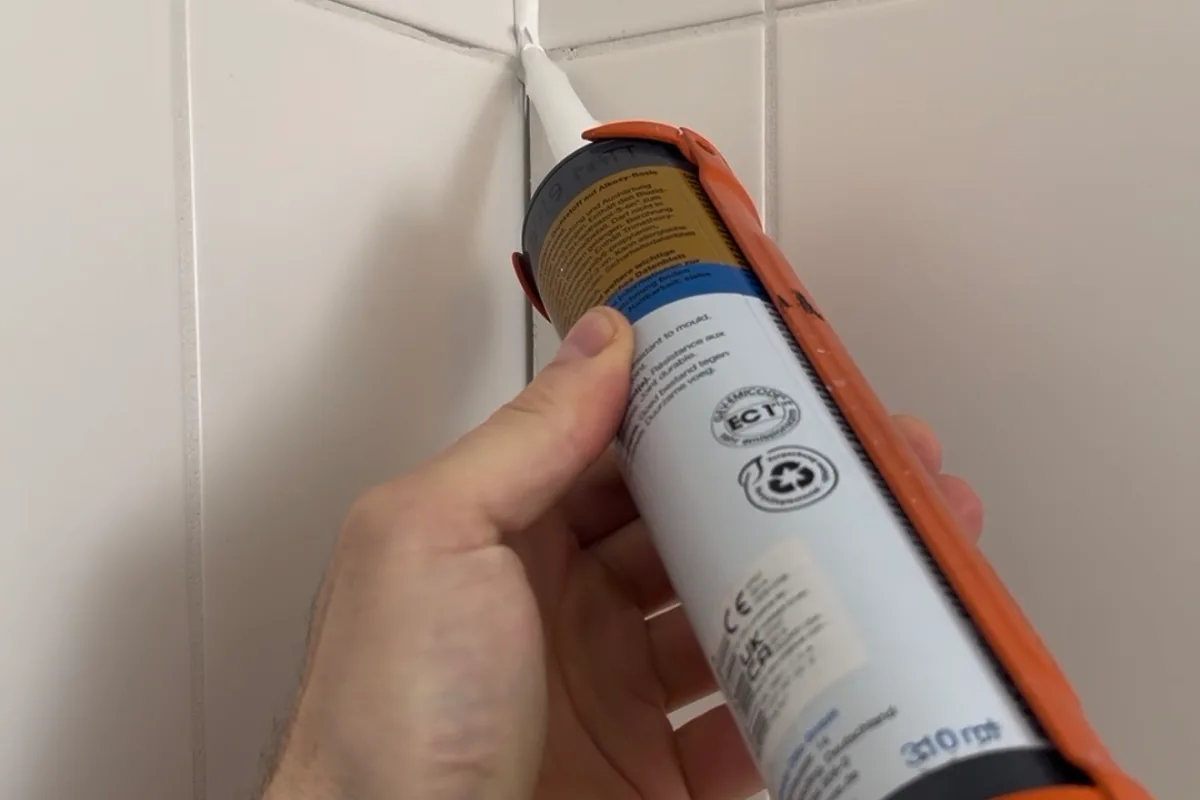
Can you paint the joint? Silicone no; acrylic yes
Paint pulls off silicone; in the shower you buy the cartridge colour, not a brush.
-
Floors and skirtings: acrylic on top, not underneath
Under the skirting there is mop water, movement and, on PVC, plasticisers; on top there is paint. That is two different cartridges.