
Why silicone peels: adhesion, primers and a clean substrate
If the bead peels leaving the tile clean, it never bonded. Greasy household cleaners, damp faces and skipped primer are the usual reasons.

A bead that peels off clean is an adhesion failure: film, moisture or residue on the substrate. Degrease with a technical cleaner. Primer is not the same product — use it when that substrate needs it.
Adhesion versus cohesion
Cohesion is the sealant holding itself together. If the bead tears through the middle, the mass failed — often age, the wrong joint shape, or movement the joint was never sized for.
Adhesion is the bond to the substrate. If you can pull the bead off and the back is still smooth and the tile looks unused, there was almost no bond. The polymers never keyed into the face.
The second failure is nearly always preparation: an invisible greasy film, a damp face, old silicone residue, or a skipped primer on a porous material.
Real cleaning
Glass spray, washing-up liquid and white spirit often leave a film (shine agents, oils). That film blocks chemical grip. Use a technical degreaser suited to the substrate — typically an isopropanol-type cleaner sold for sealant work — wipe with a lint-free cloth, and let it dry until the cloth drags, not slides.
A prep cleaner and a bonding primer are not interchangeable. One strips contamination. The other builds a bridge on a porous or difficult face. Do not swap them because the names sound similar.
Do not seal a face that still feels damp. Moisture breaks adhesion immediately.
When primer, when not
- Porous (concrete, many natural stones, wood): primer is often required so the substrate does not suck oils from the silicone and so the bond has something to key to. Which primer is a product decision — follow the silicone you are using.
- Dense, dry glass or glazed tile: thorough technical cleaning is usually enough; primer only if that system asks for it.
- Acrylic or some plastics: a light mechanical key plus the cleaner and primer named for that plastic. Smooth PE/PP is a special case; sealant can sit as beads instead of wetting the face.
- Old silicone: full mechanical removal. New silicone does not bond reliably to a cured silicone film.
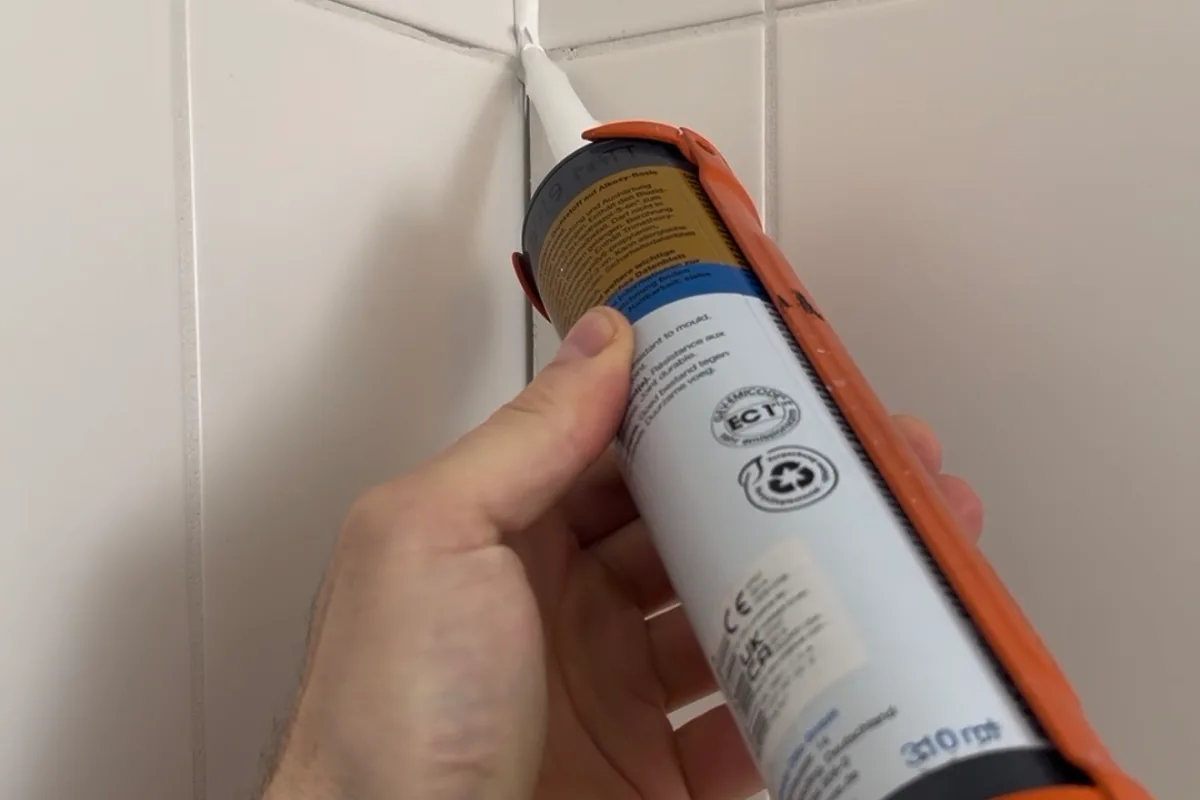
I use a sanitary silicone such as OTTOSEAL S100 on a clean shower tile. That does not make household cleaner “good enough”.
Common mistakes
- Degreasing with a product that leaves a glossy film.
- Priming the wrong face, or skipping primer on stone.
- Tooling so fast the bead never wets the flanks — it sits on the surface instead of being pressed in.
- Perfect cleaning on a tray that still moves, or a joint bonded on three faces. Geometry still wins.
Exceptions
A moving shower tray and three-sided adhesion fail even with laboratory-clean flanks. Stabilise the tray and set the joint shape first.
What I use on this joint
-
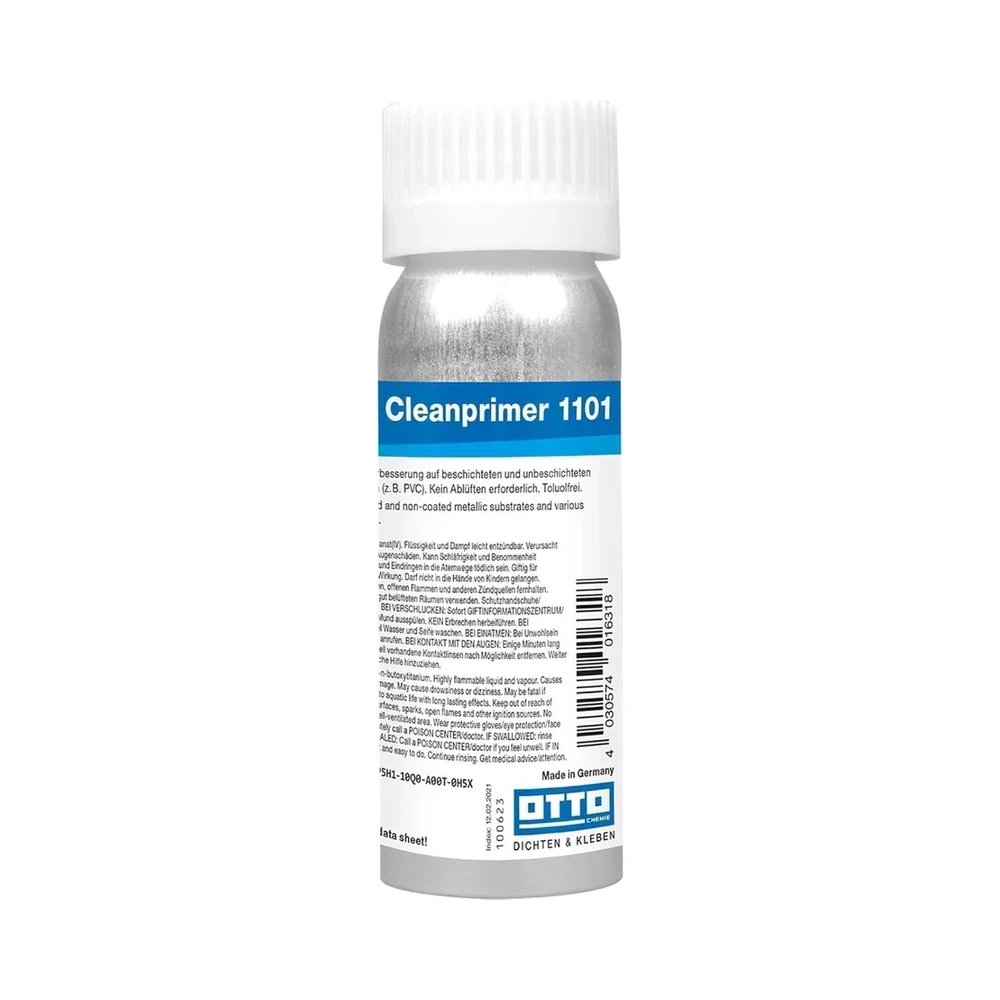
OTTO Cleaner / Cleanprimer
The technical cleaner I use to prep the substrate before sealing.
OTTO Cleaner / Cleanprimer Purchase link not available -
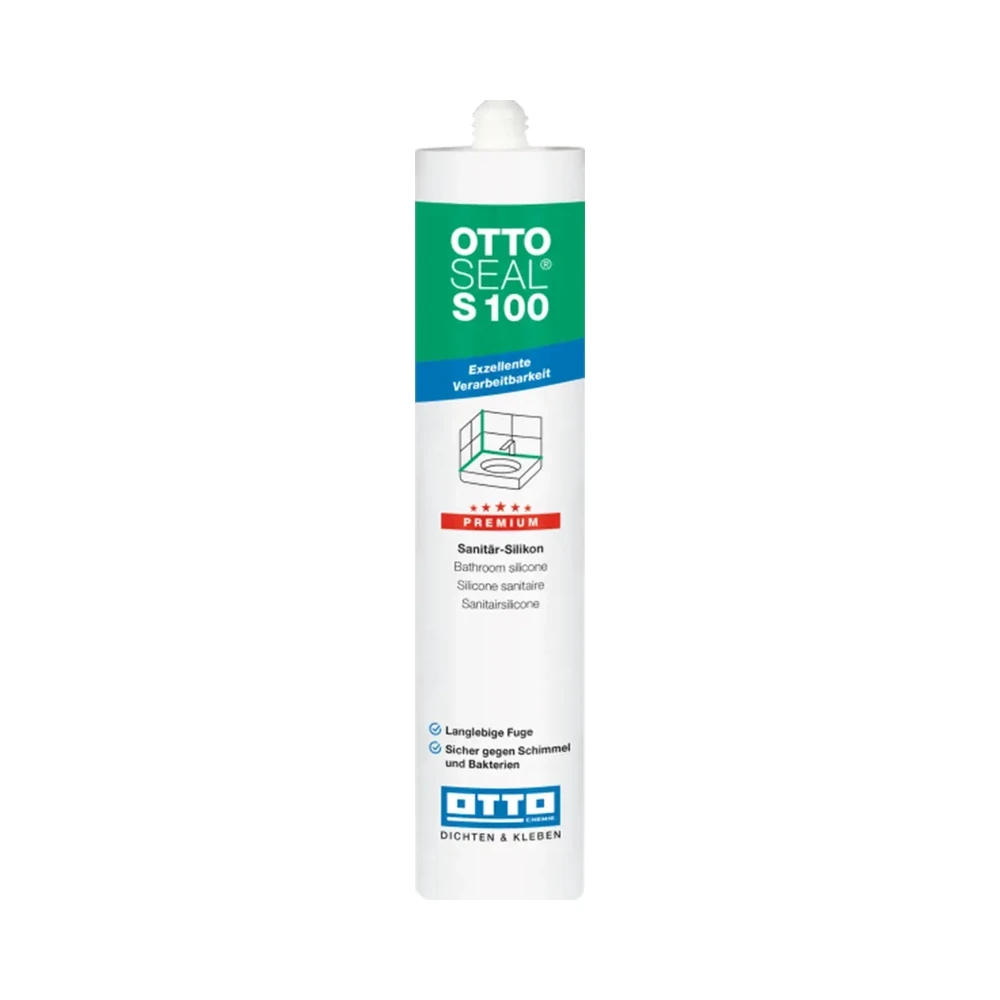
OTTOSEAL S100
The sanitary silicone I use on showers and baths. Elastic — not a staining-risk stone silicone.
OTTOSEAL S100 Purchase link not available
-
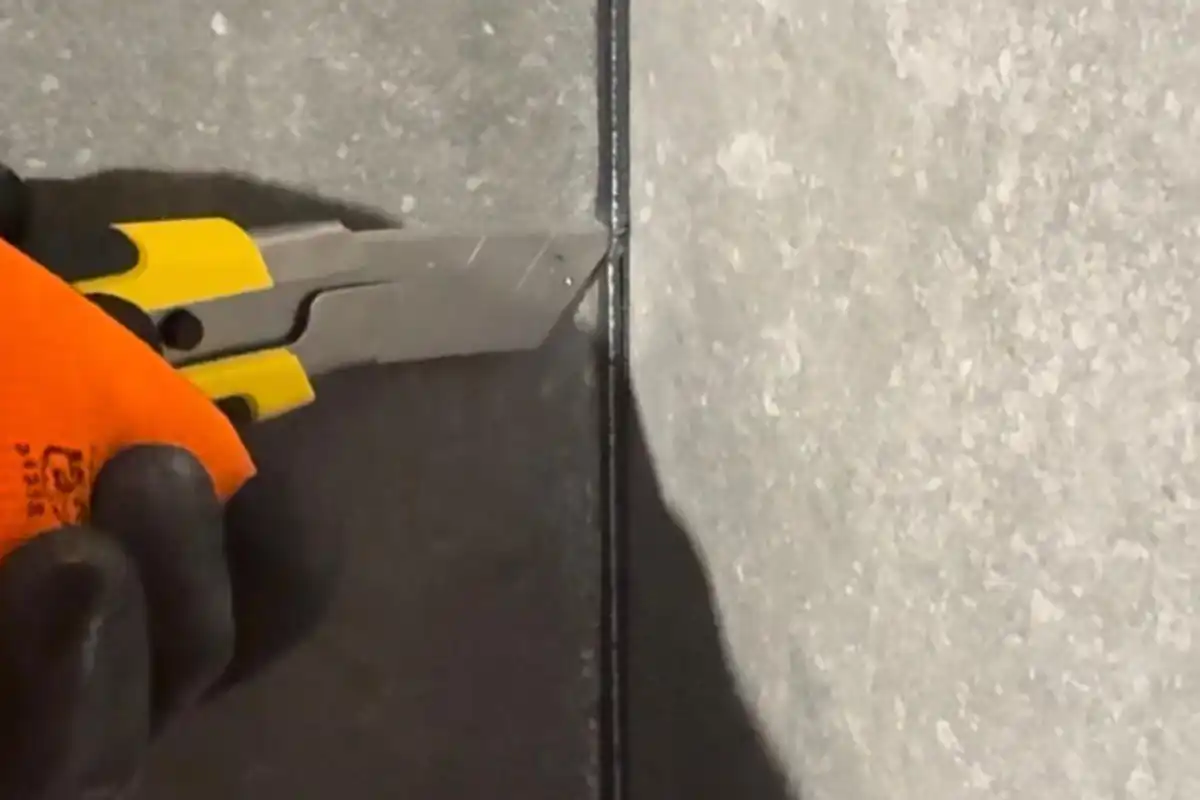
Removing old silicone: why “looks clean” is not enough
New silicone will not bond to an invisible oil film. Cut the mass, break the residue, then degrease — without scratching acrylic.
-
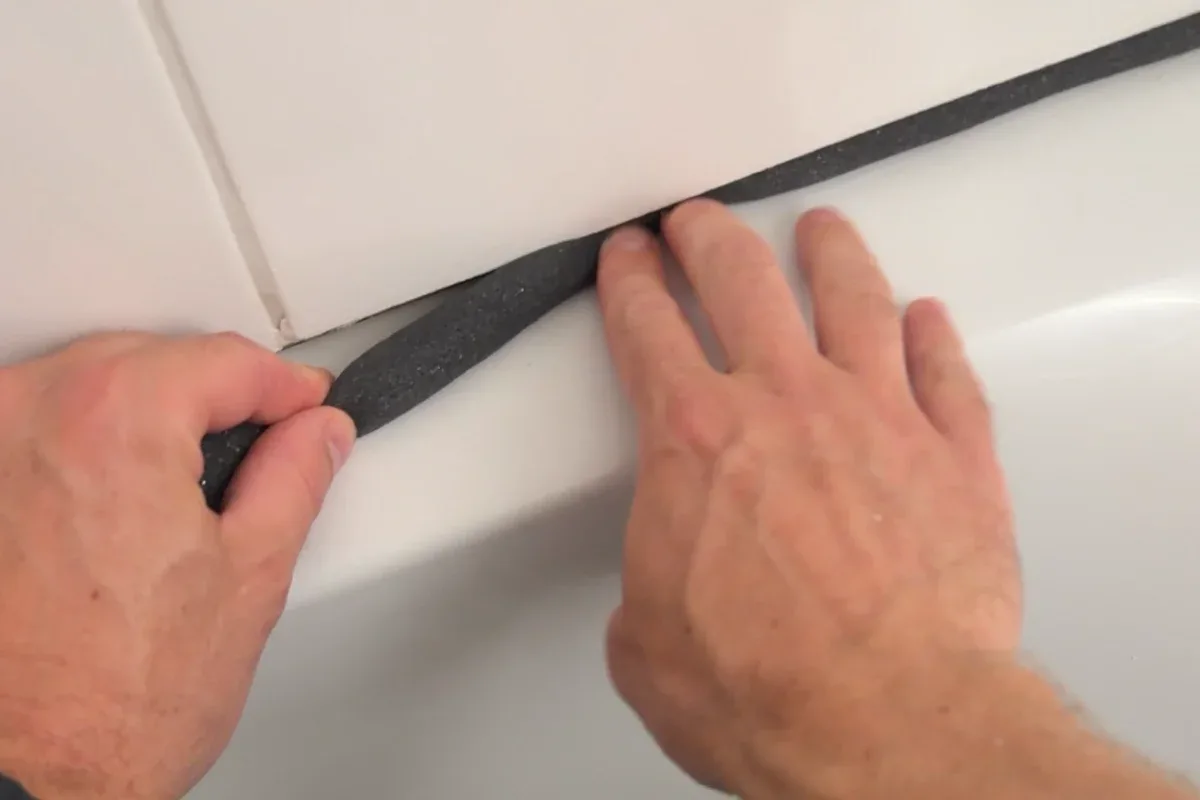
Why there is backer rod behind a sealant joint
Closed-cell PE rod sets depth and stops the bead bonding to the back, so the joint can stretch on two faces.
-
Can you paint the joint? Silicone no; acrylic yes
Paint pulls off silicone; in the shower you buy the cartridge colour, not a brush.