
Joint colour: make it disappear, don’t make it shout
Match the grout, not a guess at the tile, and check whether gloss or matt belongs on that surface.
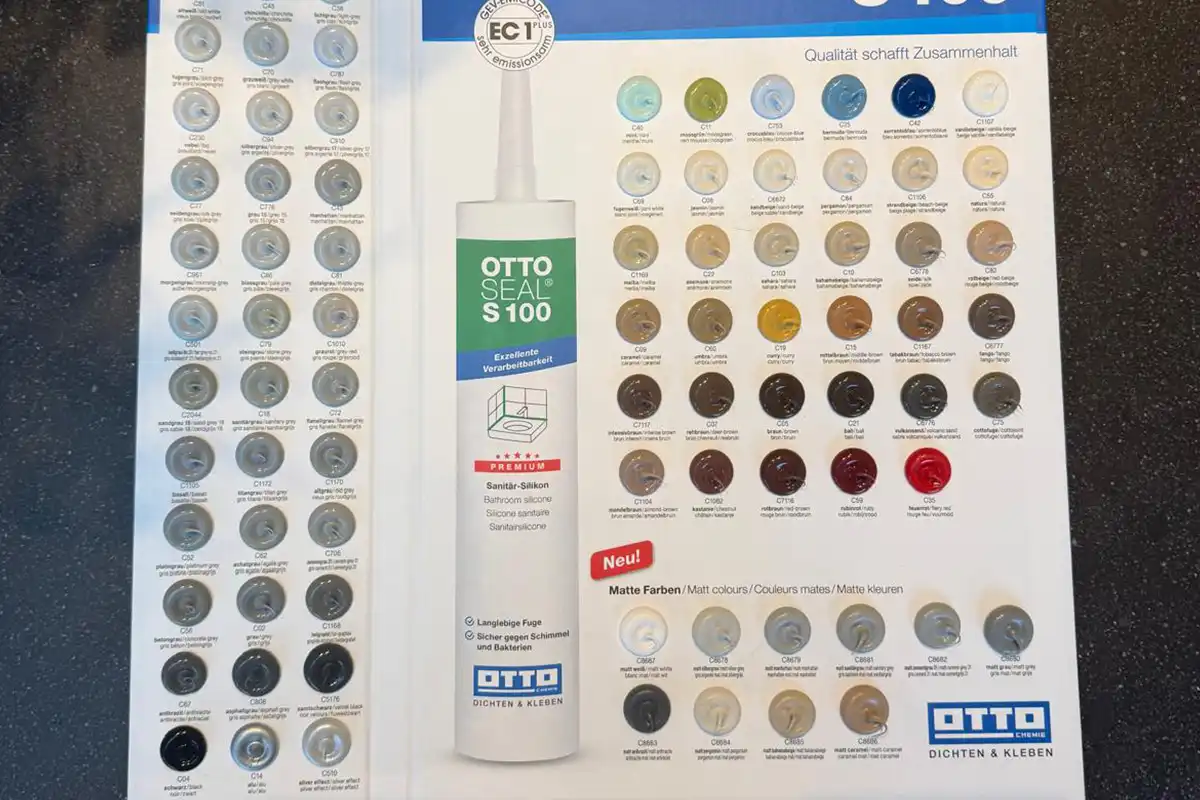
Pick the grout colour, not “the grey of the tile”. On matt surfaces, skip a glossy plastic stripe. Clear silicone is almost never invisible.
Why a white line wrecks a quiet room
You can spend a fortune on large tiles, a walk-in shower and decent taps, then draw a fat, bright-white bead around every meeting. The eye reads that line as a frame. Dark tile, dark grout, white silicone: the joint shouts. The room looks smaller and busier than the tiling deserved.
Colour is not a finishing extra. It is part of the same line-work as the grout. Get it wrong and the craft disappears. Get it right and the joint almost vanishes.
Match the grout, not the tile
The usual mistake is “grey tiles, therefore grey silicone”. Which grey? Tile faces have texture, glaze and lighting. Grout is the network you already accepted. If the bead matches that network, it joins the grid instead of cutting across it.
I hold a colour card against the grout in the actual bathroom light — daylight and the LEDs you will live with. The same shade that looks calm at noon can go cold under cool-white spots. Names such as Manhattan, sanitary grey, silver grey, concrete grey or anthracite are not interchangeable. A miss of one step on the fan looks cheap from the doorway.
On natural stone I still match grout (or the darkest quiet tone in the stone), and I use a natural-stone silicone, not a random sanitary colour that might stain the edge.
Gloss on matt is a plastic stripe
Standard sanitary silicone dries shiny. Plenty of current tiles, microcement and stone are matt. A glossy bead throws light back as a wet plastic strip. Matt silicone has a micro-texture that scatters light, so the joint sits closer to a cement grout.
Cleaning is similar if you use mild soap and a soft cloth. You do not need to “scrub extra because it is matt”. You do need to tool a matt bead in one clean pass — polishing it with ten strokes of the spatula can burn a patchy gloss into the surface. That is a tooling job, not a colour job; it still ruins the look.
High-gloss white tiles are the exception: a matt bead can look dusty there. Match sheen to sheen.
Clear is a magnifying glass
“Just use clear — it goes with everything.” It does not. You look through the bead into the gap: cut tile edges, adhesive smears, an unfinished plaster cheek. Clear also tends to go milky or yellow with age and water. I almost never use it on a bathroom joint I want to disappear.
If you need a colour that is not on a cheap DIY rack, a proper sanitary range has a long fan. I pick from that, on site, rather than inventing a custom mix.
How I choose on the day
- Identify the grout colour in the room, not from a phone photo.
- Decide gloss or matt from the tile face and fittings, not from habit.
- On stone, use stone chemistry first, then colour.
- Tool so water can run off. A pretty colour in a soap trap still goes mouldy.
White is fine when the grout is white and the tiles are glossy. Everywhere else, white is often the loudest choice in the room.
What I use on this joint
-
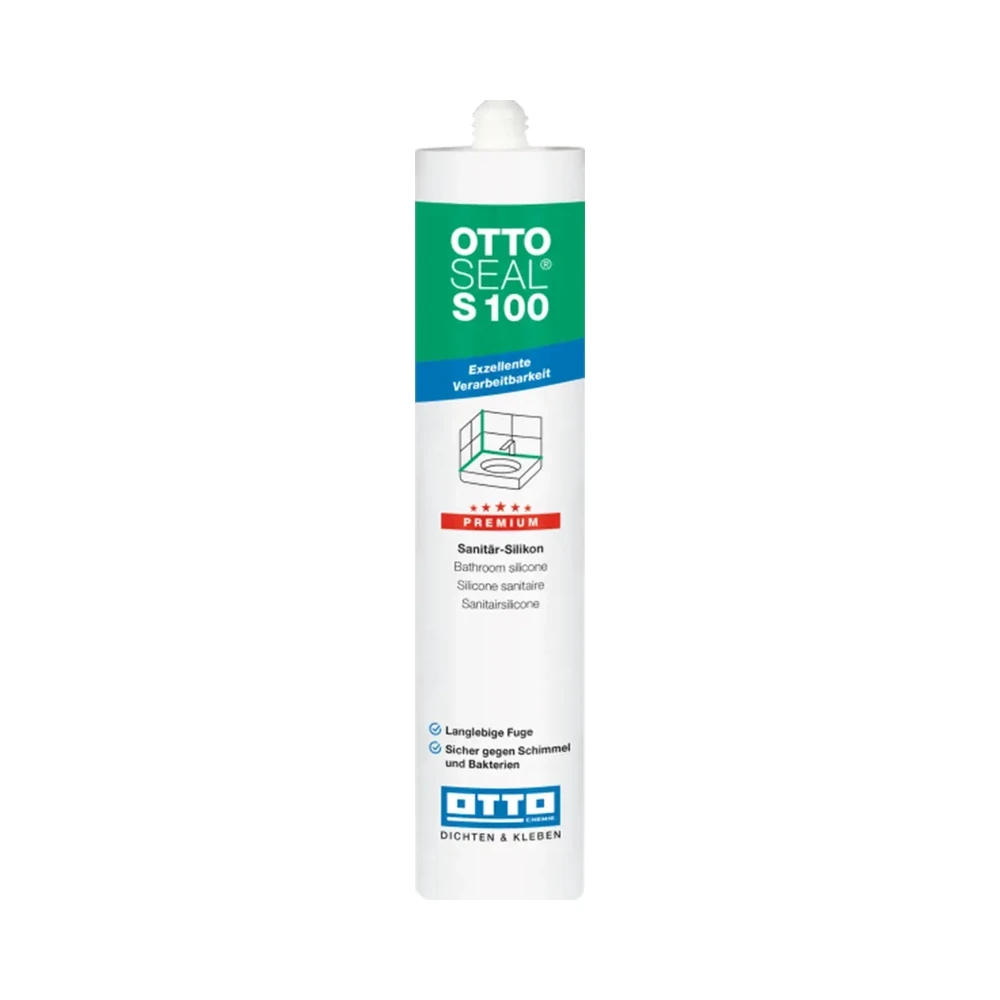
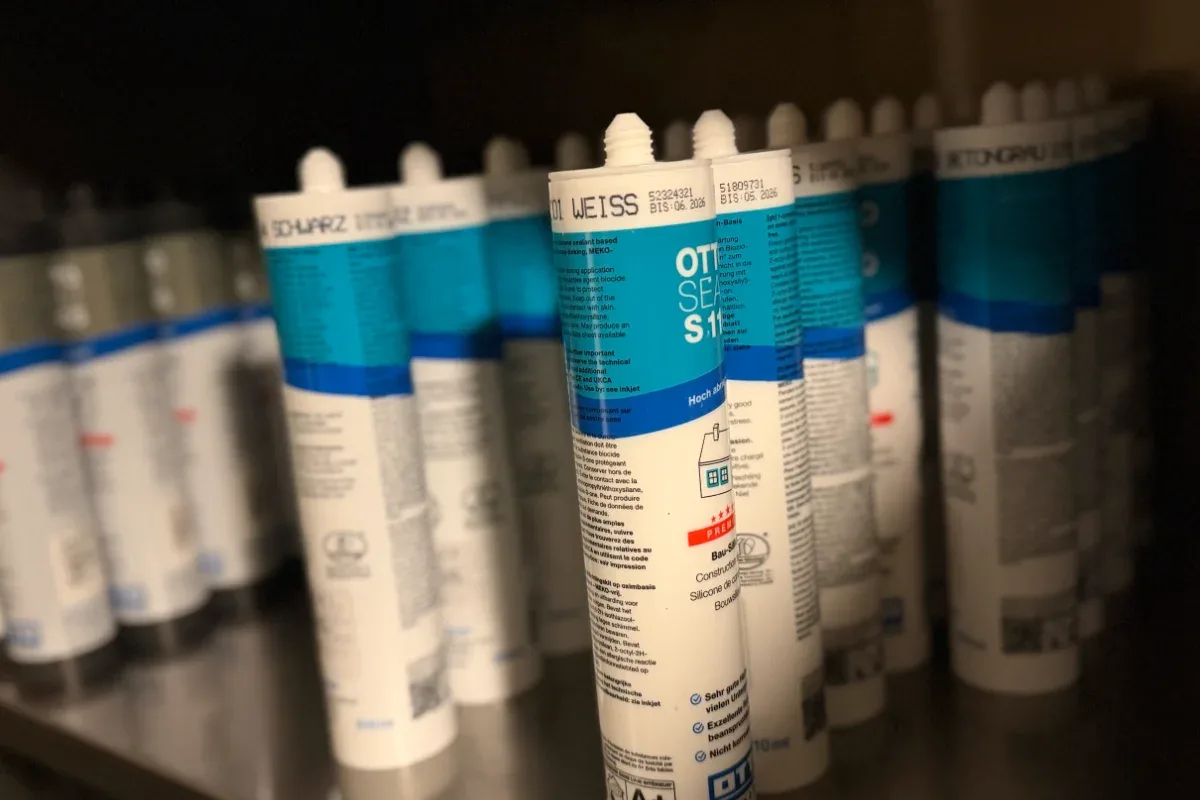
OTTOSEAL S100
The sanitary silicone I use on showers and baths. Elastic — not a staining-risk stone silicone.
OTTOSEAL S100 Purchase link not available -
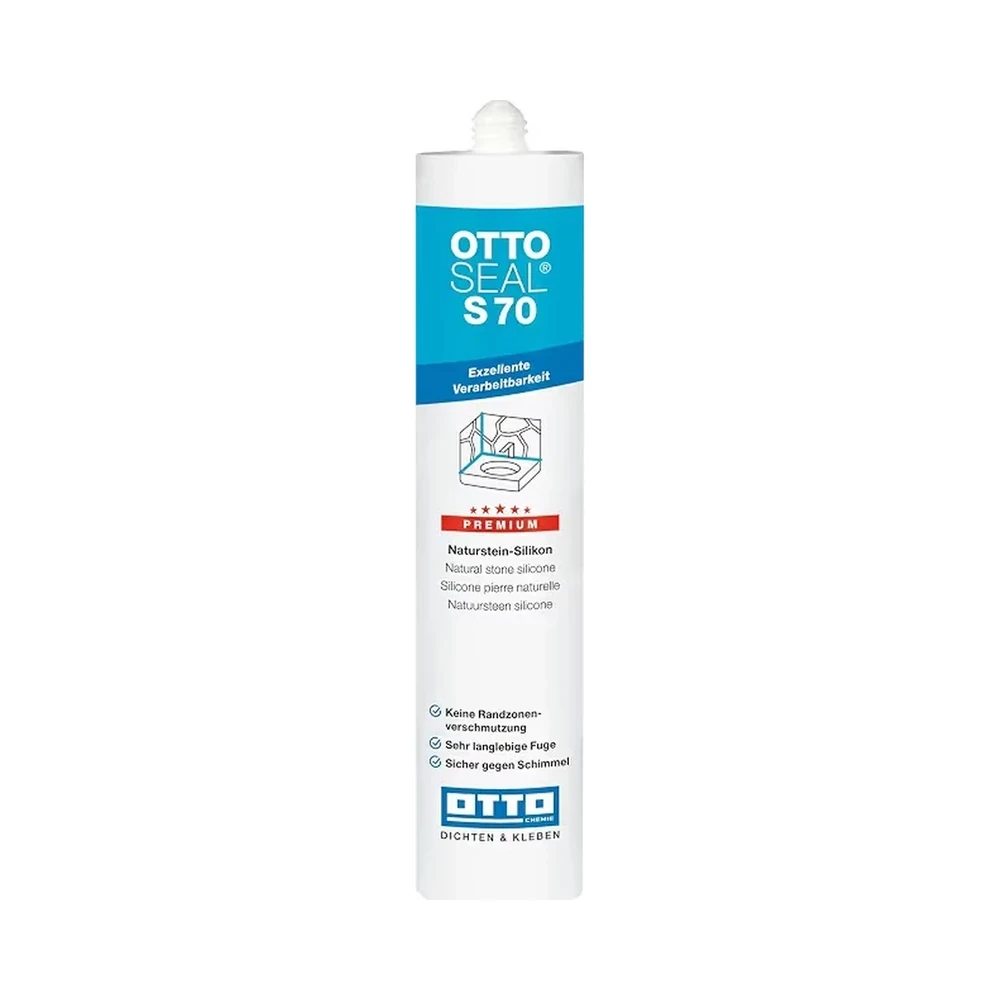
OTTOSEAL S70
For marble and natural stone — so the edge stays clean.
OTTOSEAL S70 Purchase link not available
-
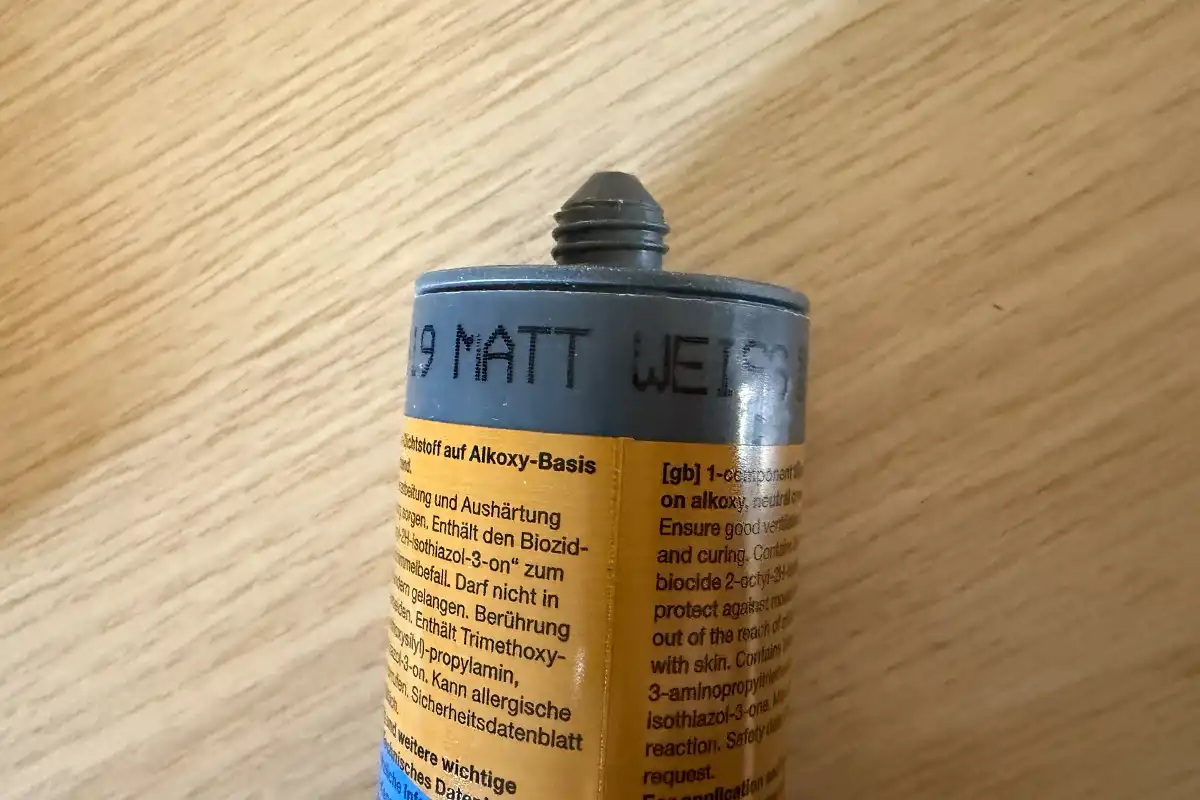
Matt tile and black taps: gloss silicone wrecks the look
Gloss bounces light; matt scatters it. On concrete-look tile, a shiny bead reads as plastic. Tool matt silicone once, then leave it.
-
Which sealant to use in the bathroom (and which not to)
Wet zone: sanitary silicone. Paintable ceiling: acrylic sealant. Stone: stone chemistry. Hybrid is not a shower wild card.
-
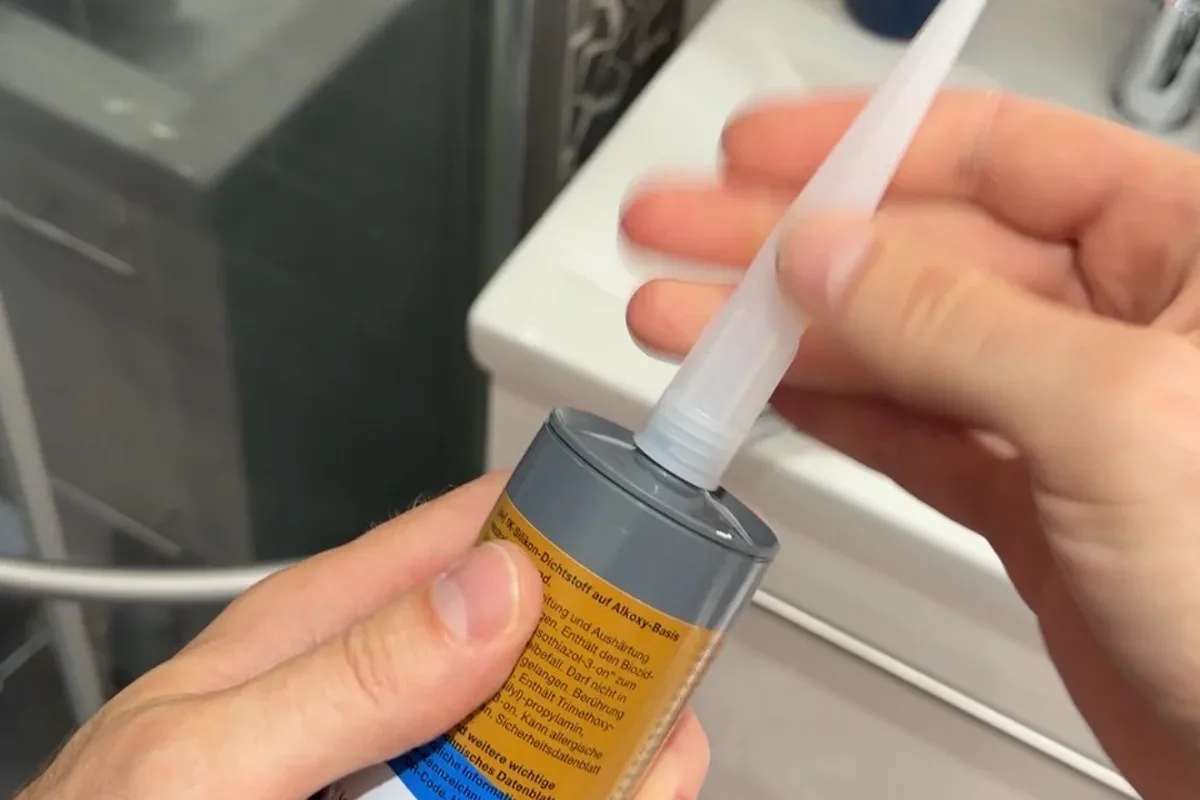
A shower tray that moves: sealant will not hold it still
An elastic joint is a seal, not a support. Stabilise the tray as its manufacturer specifies, then reseal.