
Acrylic sealant in the shower: why it will not hold water
Acrylic and silicone are different chemistries. In a wet zone acrylic can soften and fail; silicone is the usual wet-room joint.
Shower, bath rim and basin in the splash zone: sanitary silicone. Acrylic sealant belongs on dry joints you will paint. Kept wet, acrylic often softens and washes out.
The DIY-shop mix-up
On the shelf everything looks like “joint filler”: sanitary, universal, acrylic, silicone, building mastic. Acrylic is cheap, so it goes in the basket for the shower.
They are not interchangeable. Acrylic is a water-based dispersion. Silicone is an elastic polymer that cures with air moisture. Using acrylic along a shower tray or bath rim is the wet-room mistake I see most.
Acrylic and silicone are not the same paste
Acrylic sealant stays workable because it contains water. As that water evaporates the mass hardens — and shrinks. It is hydrophilic: if the cured bead lives wet, it can soften again (re-emulsify) and, over time, turn pasty and wash away. Typical acrylics also take less joint movement than a sanitary silicone (often in a lower ISO movement class). That is a class on the pack, not a promise that every tube matches every number you read online.
Silicone sealant cures by reaction with humidity (RTV). It is hydrophobic: water beads off. It stays rubbery and can follow tray and tile movement far better than a dry-zone acrylic.
Neither is “better” in the abstract. Gloss shower tile is not a living-room skirting.
If acrylic goes in the shower
At first it looks closed. Warm water and steam soften the face. You step in; the bath or tray moves a little. The stiffer acrylic cannot follow and peels from the tile (adhesion failure). Water then creeps behind the bead. The mass stays damp and becomes a good place for mould — while the line still looks “done”.
Another bead on top of failed acrylic does not fix it. Strip it first.
Where acrylic does belong
Acrylic is the right tool in the dry zone, especially where you will paint. Paint bonds to acrylic; on silicone it crawls into fish-eyes.
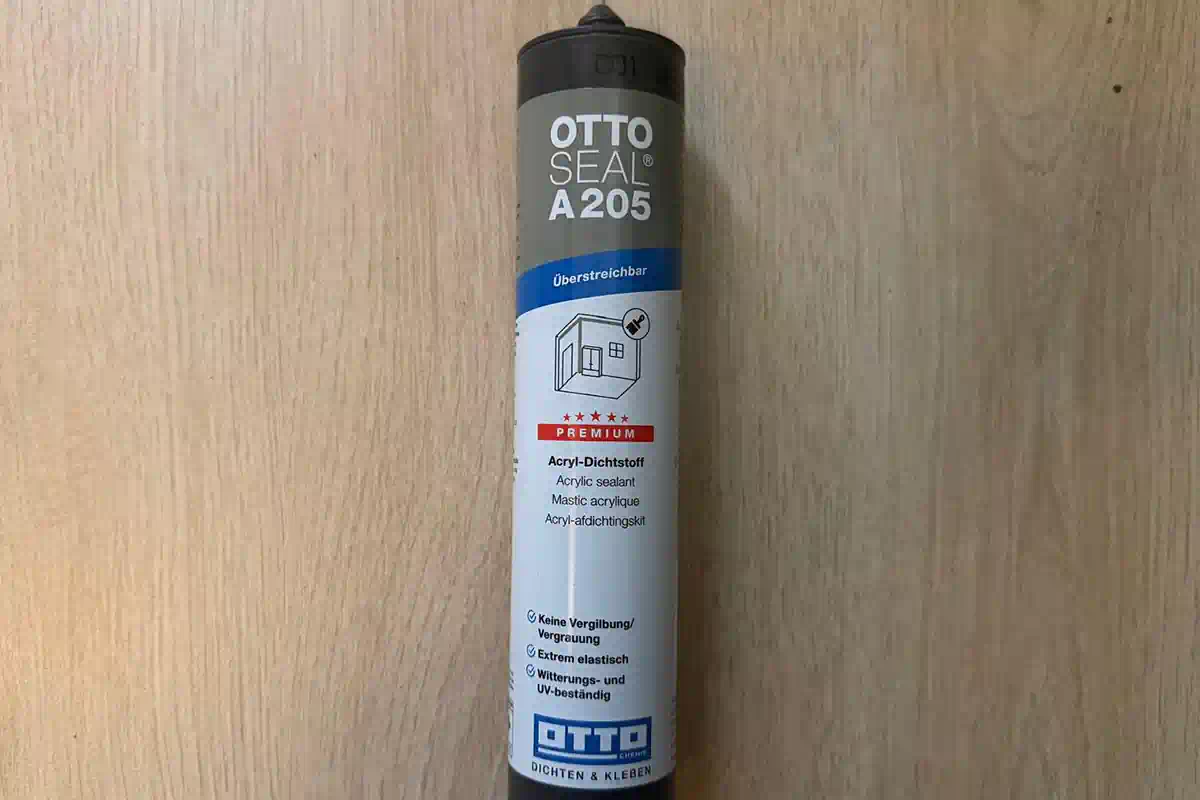
Typical uses: ceiling-to-wall junctions, door linings, the top of skirtings in a living room. I use a paintable acrylic there (OTTOSEAL A205 is the one I carry). I do not use acrylic on the shower corner, the bath rim in the splash, or the kitchen sink splash if that joint sees standing water.
A bathroom ceiling joint that never sees spray can still be paintable acrylic. The shower corner cannot.
How to tell old acrylic from silicone
Press a thumbnail. Hard, crumbly, powdery scraps: usually old acrylic. Rubbery, slightly glossy, springs back: usually silicone. When in doubt, treat a wet-zone joint as silicone work: full removal, then sanitary silicone.
True silicone is not overpaintable. Some hybrid sealants (MS polymers) can be painted, but they are a different product — often too coarse for a fine sanitary line. Keep the jobs split: silicone for water, acrylic for paint.
Exceptions
Special exterior acrylics exist for some outdoor gaps that will be painted over. Glazing and façade movement joints are a different family (hybrids or PU as specified). That is not a reason to put interior acrylic in the shower.
What I use on this joint
-
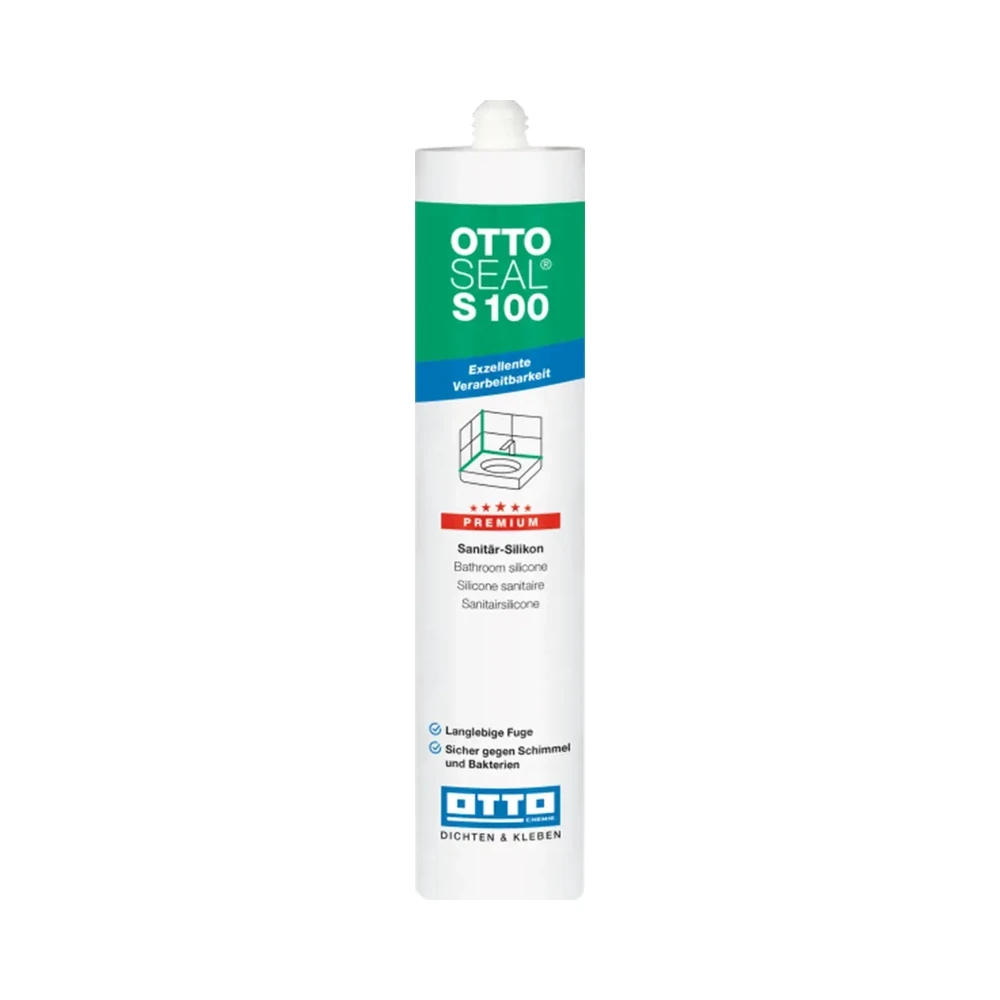
OTTOSEAL S100
The sanitary silicone I use on showers and baths. Elastic — not a staining-risk stone silicone.
OTTOSEAL S100 Purchase link not available
-
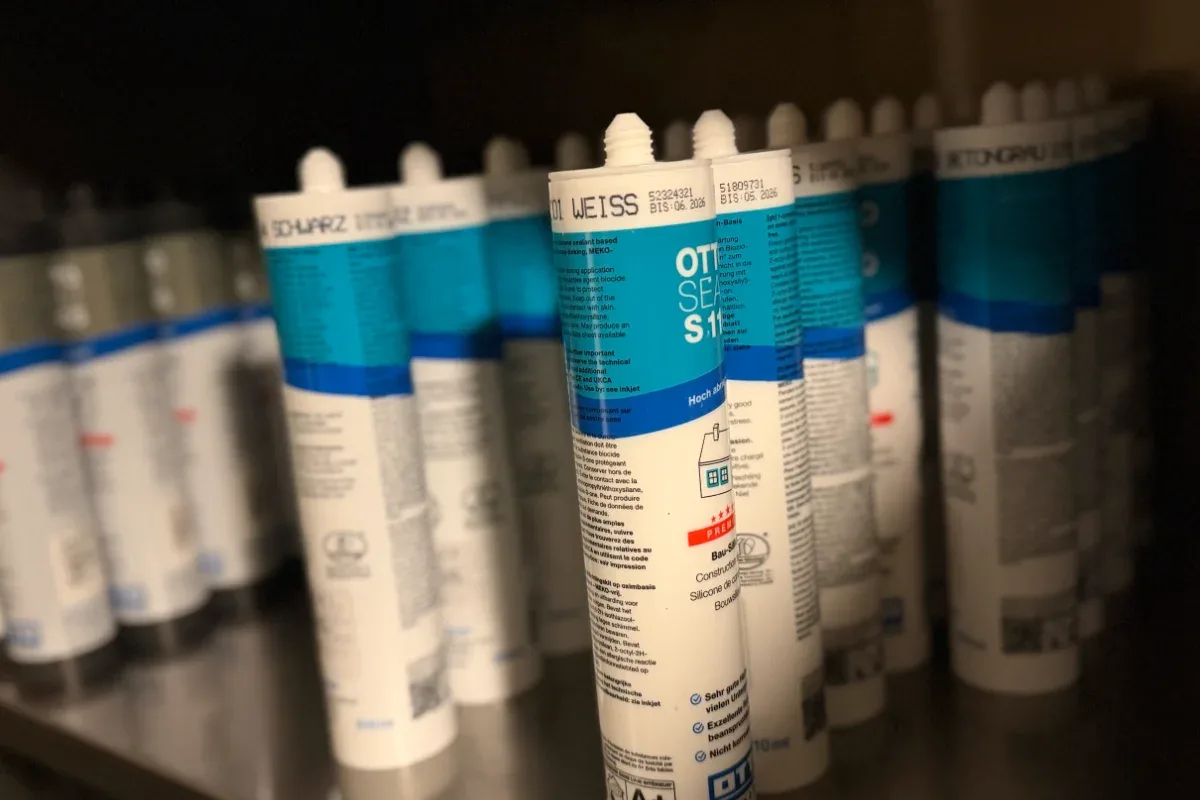
Which sealant to use in the bathroom (and which not to)
Wet zone: sanitary silicone. Paintable ceiling: acrylic sealant. Stone: stone chemistry. Hybrid is not a shower wild card.
-
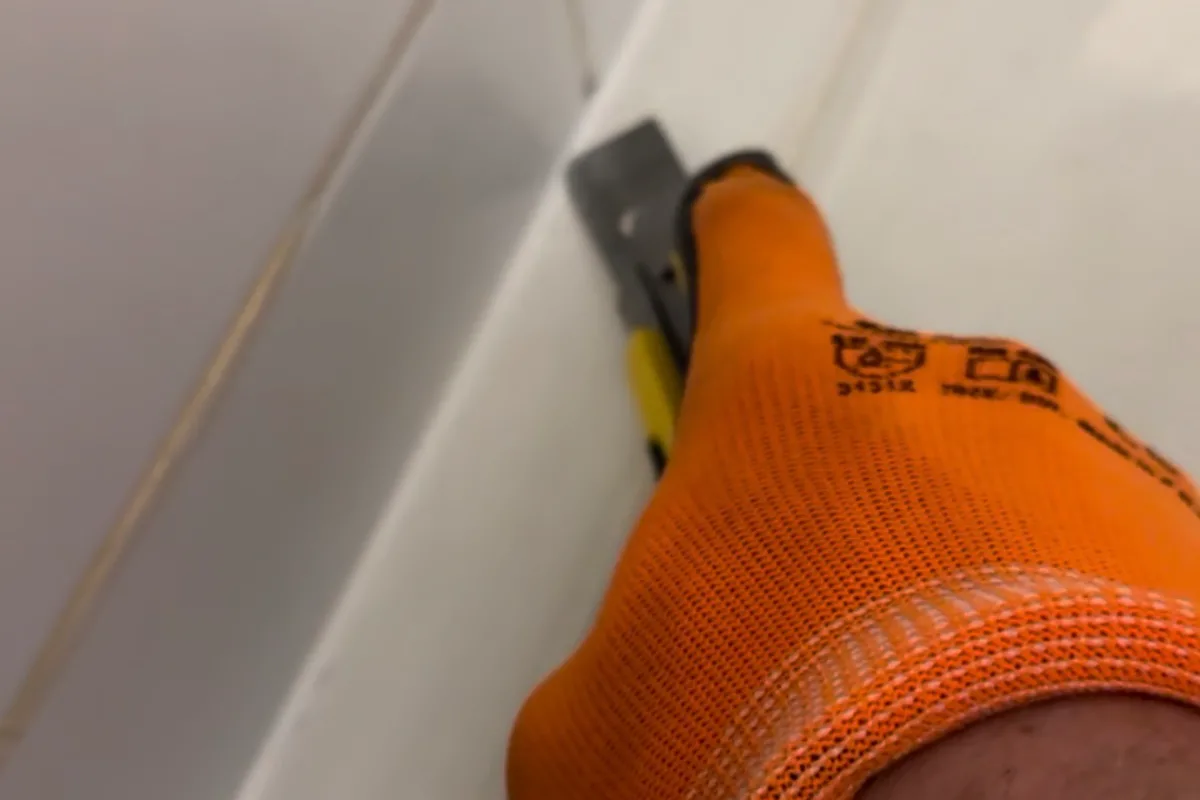
Silicone or acrylic: they are not interchangeable
Acrylic in the shower softens and washes out; silicone on the skirting will not take paint: pick the cartridge for water or for paint.
-
A shower tray that moves: sealant will not hold it still
An elastic joint is a seal, not a support. Stabilise the tray as its manufacturer specifies, then reseal.