
Silicone or acrylic: they are not interchangeable
Acrylic in the shower softens and washes out; silicone on the skirting will not take paint: pick the cartridge for water or for paint.
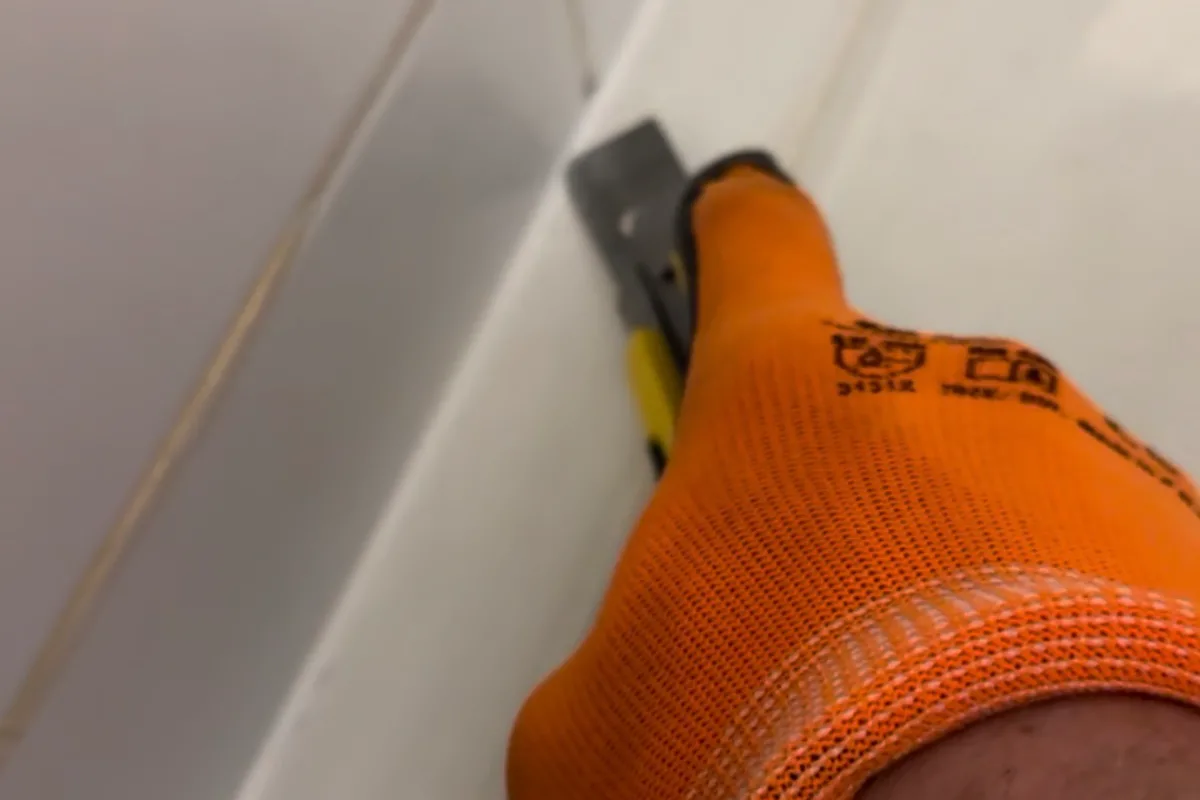
Where there is water and movement you use silicone, and you do not paint it. Where you will paint in the dry, you use acrylic sealant. The other way round, you get pudding in the shower or fish-eyes in the paint.
The line that does not move
Silicone (bathrooms, wet kitchen, glass): sheds water, stays elastic and, if it is decent sanitary grade, carries mould protection. You do not paint it. Shower, WC, sink and junctions that move: this is the material.
Acrylic sealant (living room, bedroom, stair, ceiling, skirting to be painted): cures by water evaporating and goes harder. It is for closing gaps before paint. In the wet shower corner it soaks, softens, moulds and lets go.
If acrylic is already in the shower, take it out. It will not “hold for a bit”.
Why paint and silicone fight
Silicone has very low surface tension: it throws off water and paint as well. The film pulls into islands, craters, fish-eyes. Acrylic is more porous and paint will key to it.
“Paintable silicones” exist. On site, after a while, the paint often crazes because the bead stays more elastic than the paint film. If you will really paint, use real acrylic (or a hybrid with your eyes open, especially outside).
How to tell which tube it is if the label is gone
Smells of vinegar: acetoxy silicone, no argument.
Rubbed between fingers: greasy and water will not shift it, silicone. Washes off with water, water-based acrylic.
On an old joint: if a fingernail springs back like rubber, silicone; if the dent stays or it is rock-hard, acrylic.
The usual mistakes
Interior acrylic on a façade or a sill in the first rain, if it has not cured: it washes out. Outside, often hybrid or silicone, not the skirting tube.
Cheap acrylic that shrinks a lot: if you paint too soon, the paint still splits. Wait at least 24 hours on a normal joint; in the cold or on fat joints, longer.
Silicone on a timber floor that still needs varnish: contamination. The varnish will never wet that spot again.
Site order: skirtings and stairs with acrylic before the last paint coat. Sanitary work with silicone after painting, so you do not grease the enamel.
Exceptions
A bathroom corner away from water, to be painted: acrylic. The shower tray, no.
Wide acrylic joints: sometimes two passes, or a low-shrink acrylic. If it always cracks, the gap is too wide, or you painted over the shrink.
What I use on this joint
-
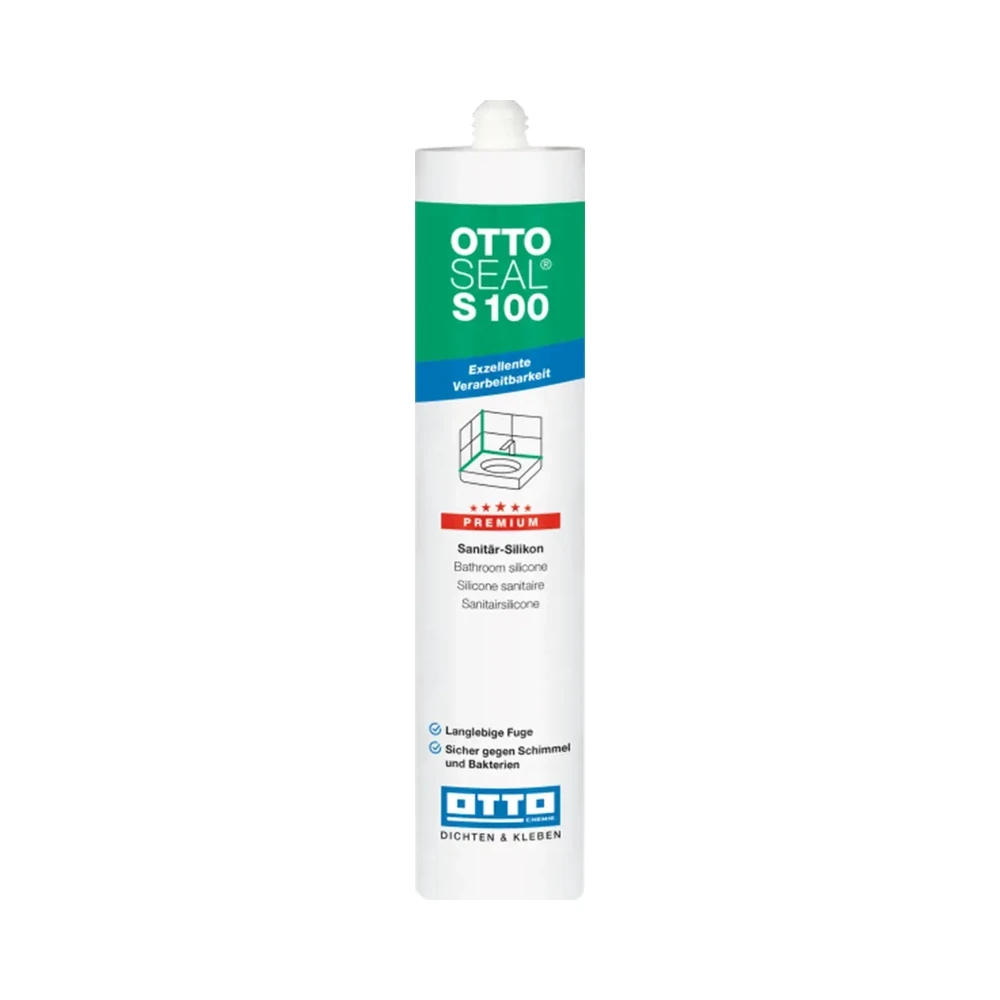
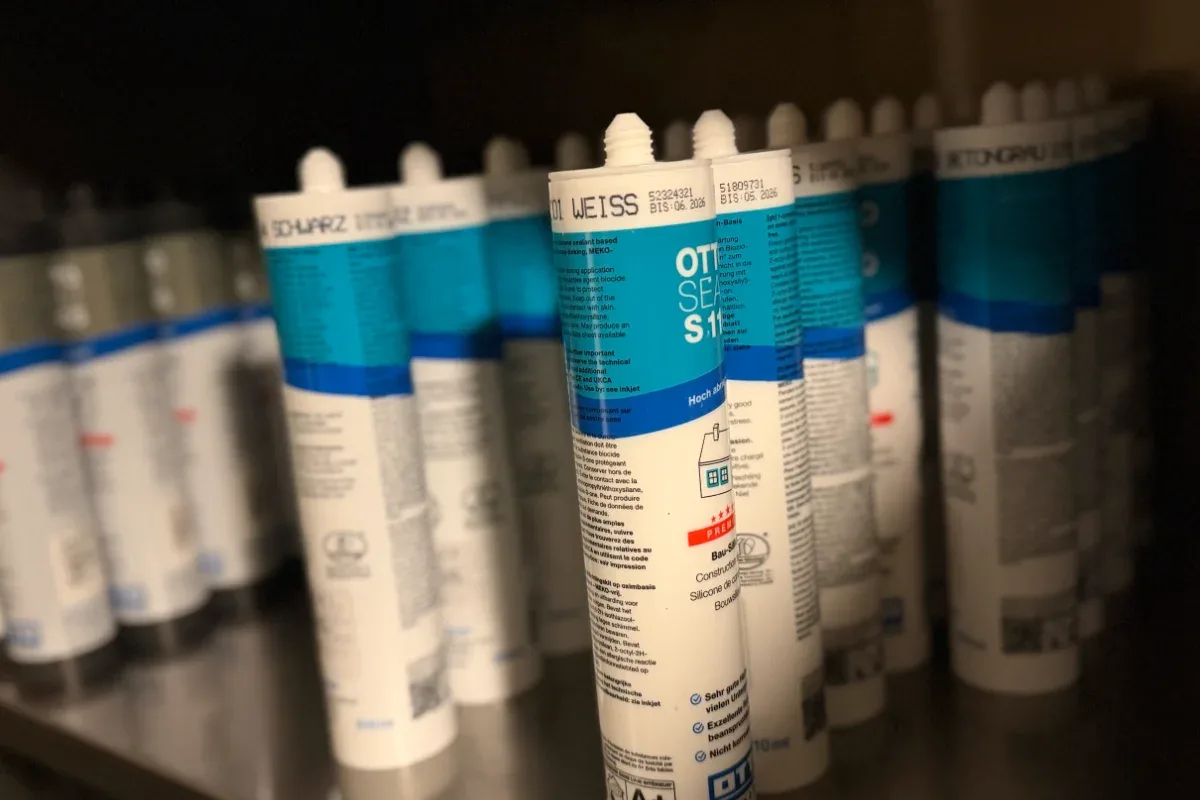
OTTOSEAL S100
The sanitary silicone I use on showers and baths. Elastic — not a staining-risk stone silicone.
OTTOSEAL S100 Purchase link not available
-
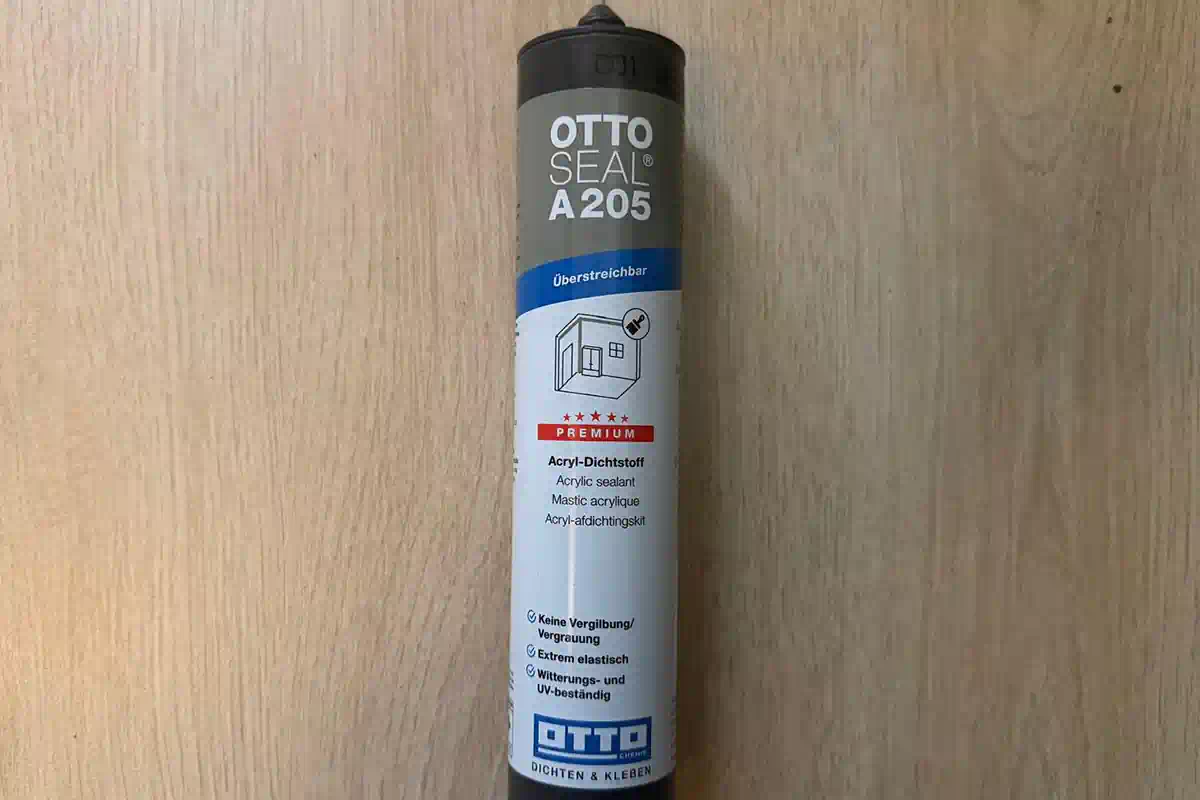
Acrylic sealant in the shower: why it will not hold water
Acrylic and silicone are different chemistries. In a wet zone acrylic can soften and fail; silicone is the usual wet-room joint.
-
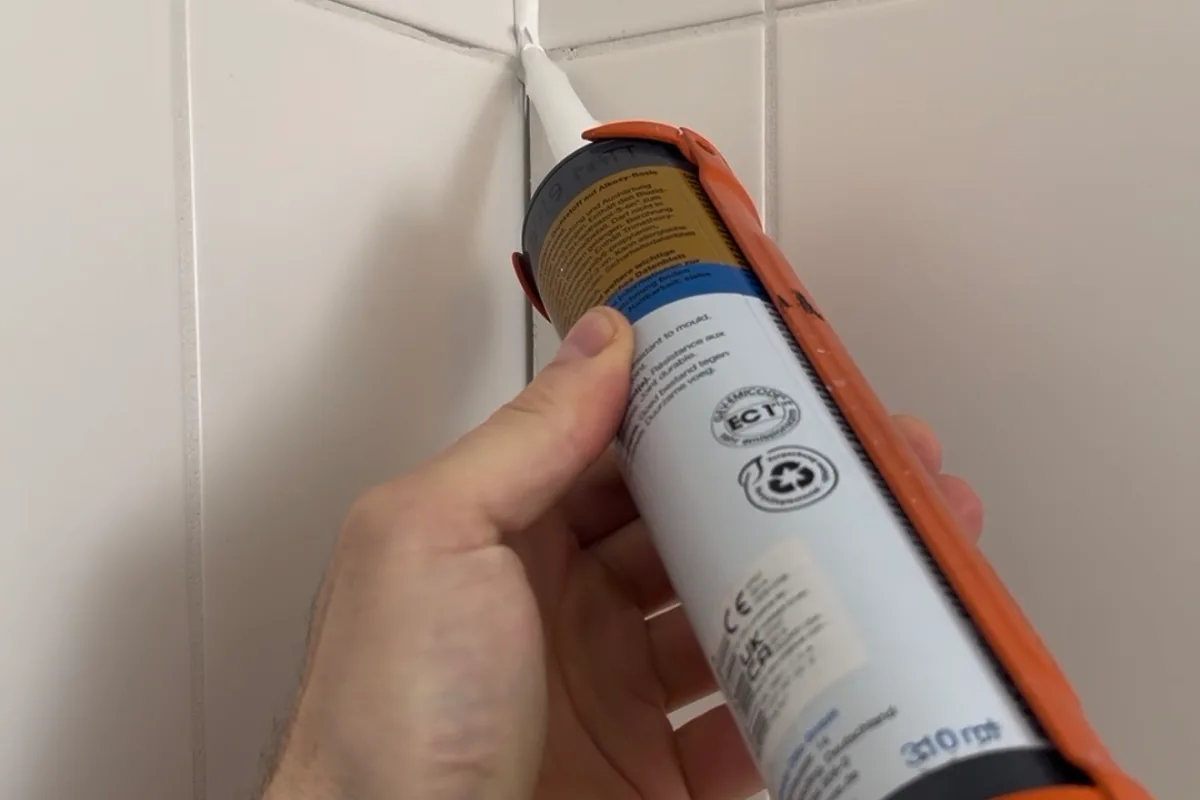
Can you paint the joint? Silicone no; acrylic yes
Paint pulls off silicone; in the shower you buy the cartridge colour, not a brush.
-
Which sealant to use in the bathroom (and which not to)
Wet zone: sanitary silicone. Paintable ceiling: acrylic sealant. Stone: stone chemistry. Hybrid is not a shower wild card.