
Kitchen sink: on top, under the worktop, or both?
The visible bead is not enough. On an undermount, the joint underneath is what saves the worktop edge.
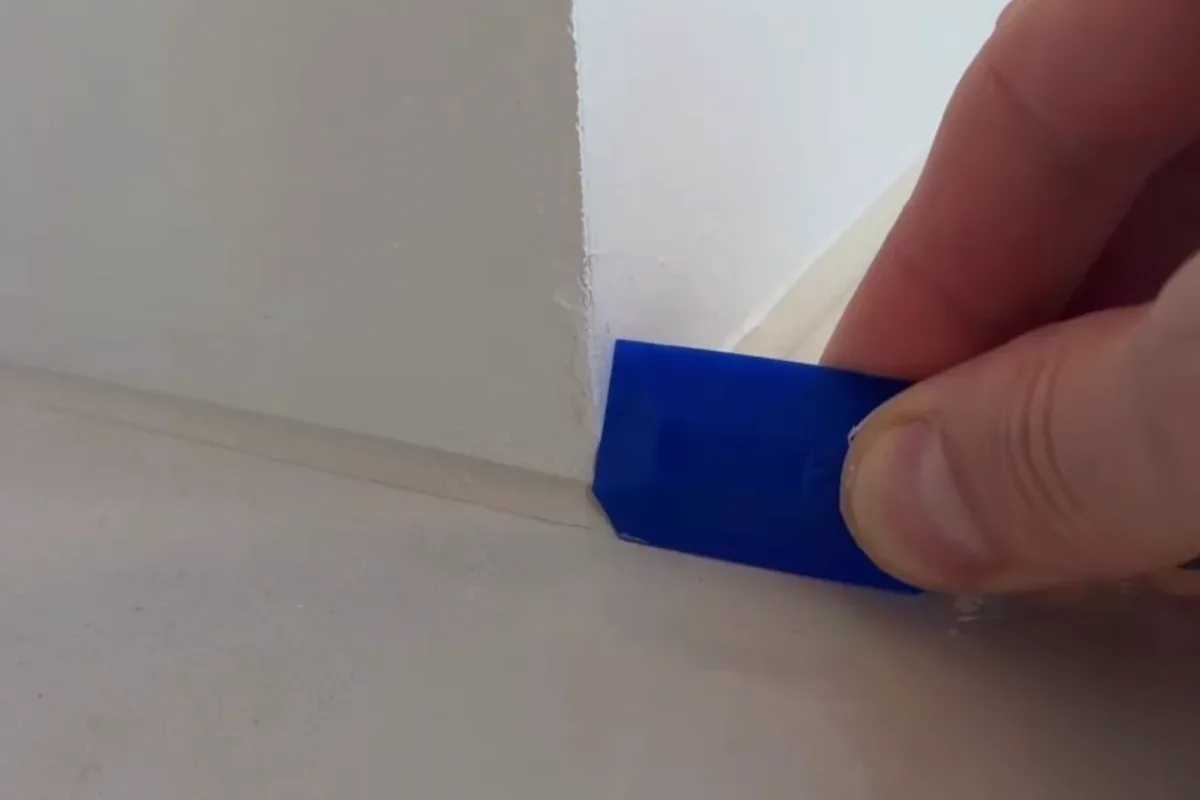
Inset: a joint on the top flange, against the worktop. Undermount: mainly underneath, between flange and cut edge. Swollen chipboard is not rebuilt with paste.
Water finds the cut edge
A kitchen lives with fat, washing-up and almost constant moisture. An elastic, neutral bead that copes with cleaners — OTTOSEAL S100 here, or a stone silicone if the worktop stains — is not “any bathroom tube”.
Inset (the sink sits on top): the critical joint is the top flange against the worktop. Miss it and water creeps between flange and cut edge.
Undermount: the joint that saves the core is underneath, between the bowl flange and the underside of the board. A pretty bead on top and nothing below leaves chipboard open to the washing-up. The edge swells, rots and the bowl lets go.
The visible line alone is not enough. And if the cut-out is already rotten or soft, I do not rebuild it with silicone: worktop or timber repair first.
How I do it
- Cut out all the old sealant, without wrecking the edge.
- Degrease, dry, dust-free. In a kitchen the flank is often greasy: skip the degrease and you get no adhesion.
- Primer only if that substrate needs it (some stone, porous timber).
- Undermount: a continuous bead underneath, pressed home. Inset: geometry on the top flange.
- Tool at once. Keep water off for a day or two, depending on depth and product; that is not a universal timer.
If the meeting is deep, backer rod or bond-breaker tape: three-sided adhesion kills the stretch.
Mistakes I see
Forgetting the undermount. Sealing onto grease or wet. Gun fresh silicone over the old. Aggressive kitchen cleaners on a fresh joint.
Natural stone: stone chemistry, or you get a halo on the edge.
Exceptions
A swollen core, a cut-out that will no longer take screws: joinery. A skinny undermount that was cut badly is not “filled” until the bowl actually sits.
What I use on this joint
-
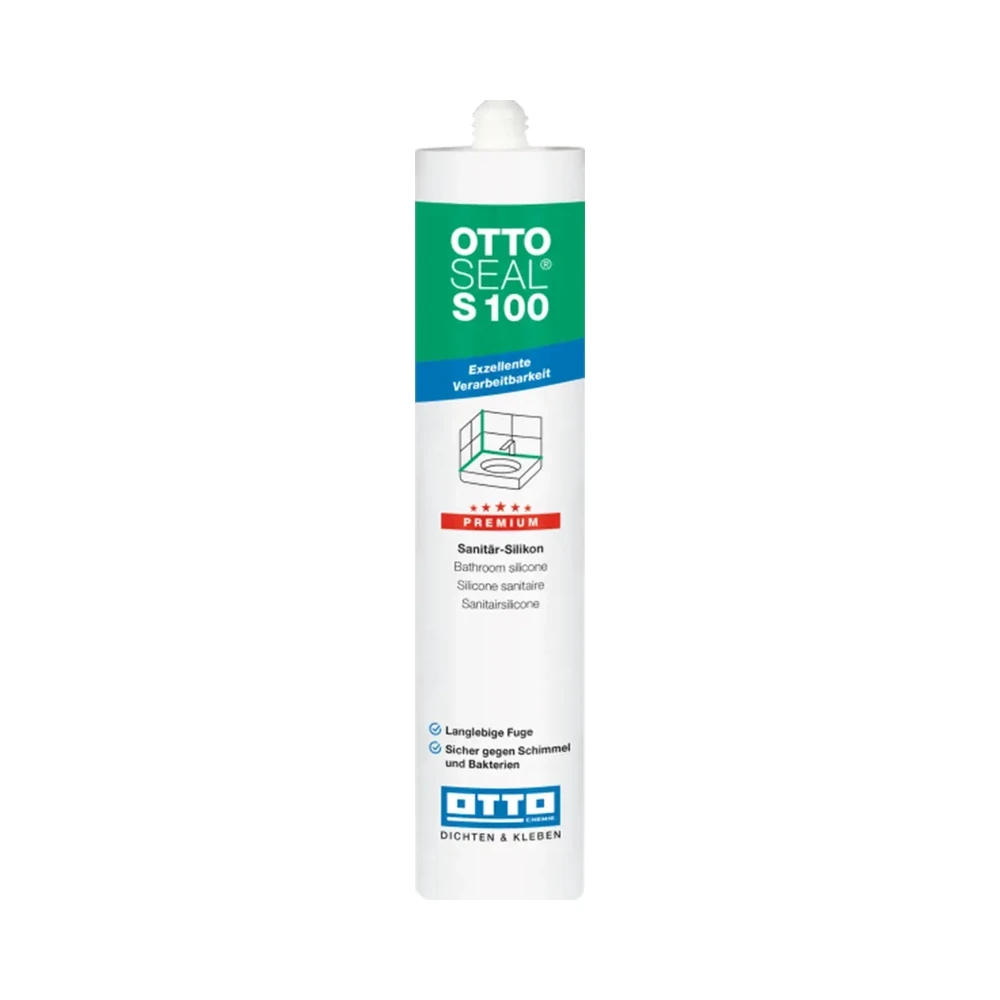
OTTOSEAL S100
The sanitary silicone I use on showers and baths. Elastic — not a staining-risk stone silicone.
OTTOSEAL S100 Purchase link not available -
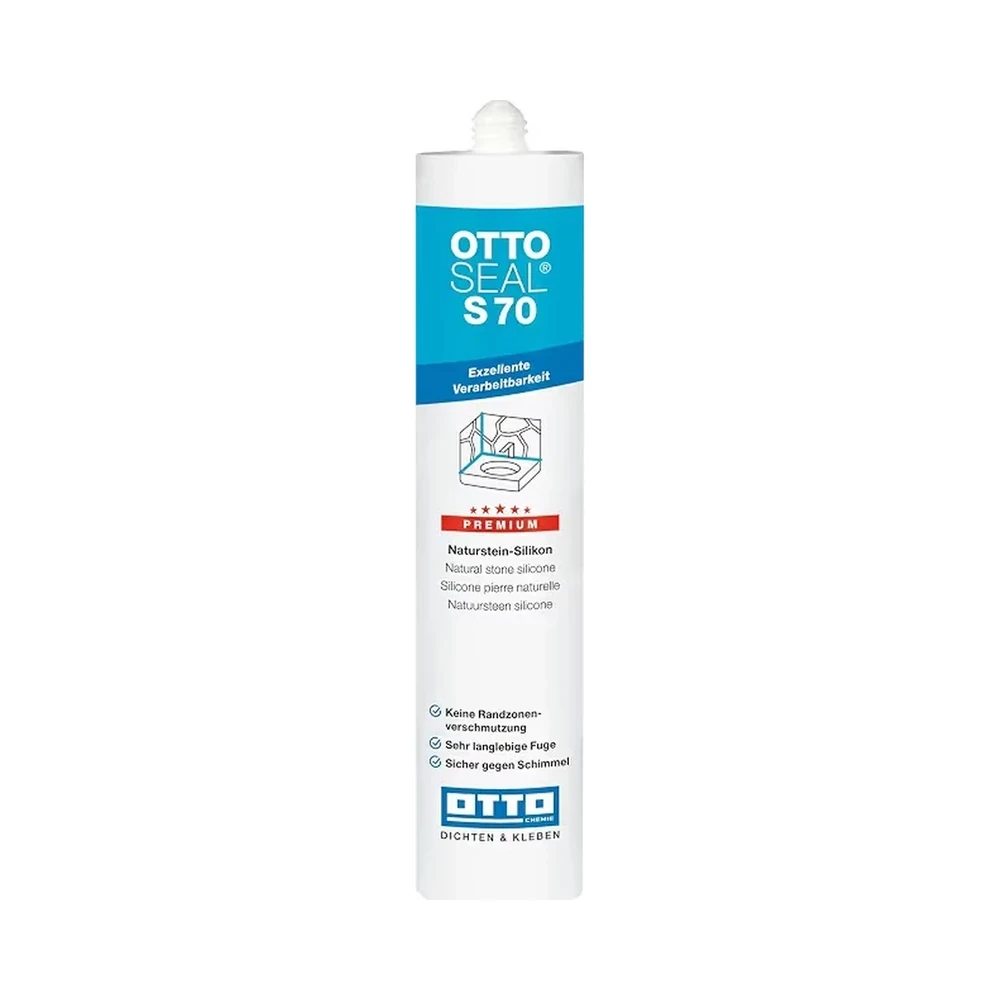
OTTOSEAL S70
For marble and natural stone — so the edge stays clean.
OTTOSEAL S70 Purchase link not available -
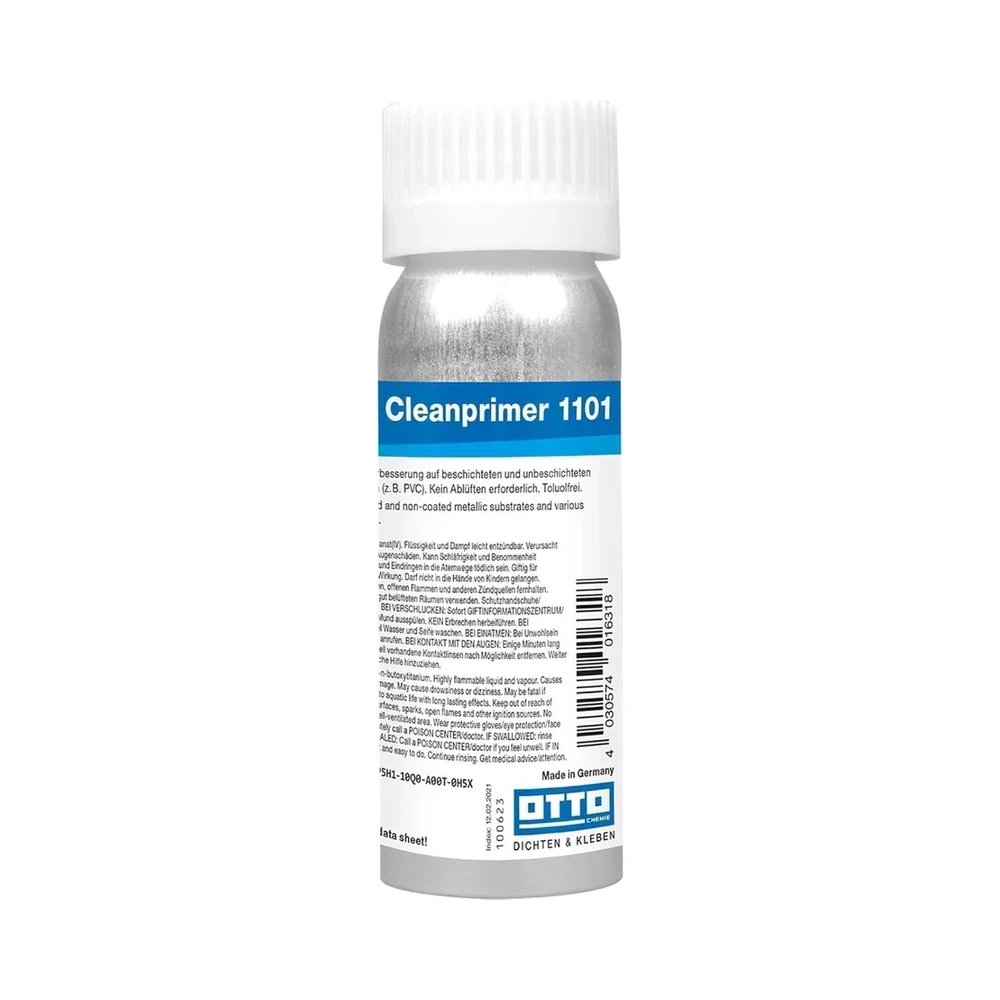
OTTO Cleaner / Cleanprimer
The technical cleaner I use to prep the substrate before sealing.
OTTO Cleaner / Cleanprimer Purchase link not available
-
Sealing the worktop: four places it fails first
Sink, upstand, hob and edge go first: the enemy is invisible grease, not the cartridge colour.
-

Why silicone peels: adhesion, primers and a clean substrate
If the bead peels leaving the tile clean, it never bonded. Greasy household cleaners, damp faces and skipped primer are the usual reasons.
-
Sealing marble or natural stone: stop the greasy halo
Ordinary sanitary silicone can feed oil into porous stone. Neutral cure is not the same as a natural-stone grade.